

A high-yield savings account (HYSA) is a federally insured deposit account that pays significantly more interest than a standard savings account. As of june 2026, top-tier HYSAs pay up to 5.00% APY compared to the 0.38% national average for traditional savings. That gap is not trivial. On a $10,000 balance, the difference adds up to hundreds of dollars per year. Understanding the types of high-yield savings accounts available, from online-only options to credit union accounts, helps you pick the right fit for your goals. Providers like Marcus by Goldman Sachs, CIT Bank, SoFi, and Varo each offer distinct features worth comparing before you commit.
1. What are the main types of high-yield savings accounts?
High-yield savings accounts fall into several distinct categories. Each type serves a different kind of saver, and knowing the differences upfront saves you time when comparing offers.
- Online-only HYSAs. These accounts are offered by digital banks with no physical branches. They consistently post the highest APYs because they carry lower overhead costs. SoFi, Varo, and Marcus by Goldman Sachs are well-known examples. Most require no minimum balance to open.
- Traditional bank HYSAs. Brick-and-mortar banks like Chase or Wells Fargo occasionally offer high-yield savings tiers, but their rates rarely match online competitors. The tradeoff is in-person service and branch access.
- Credit union HYSAs. Credit unions are member-owned nonprofits. Their savings accounts, often called share accounts, can offer competitive rates and lower fees. Deposits are insured by the NCUA rather than the FDIC, but coverage limits are identical.
- Tiered-rate HYSAs. Some banks pay higher APYs on larger balances. CIT Bank’s Platinum Savings account, for example, pays its best rate only on balances above a set threshold. This structure rewards savers who can maintain higher deposits.
- Promotional-rate HYSAs. Certain banks offer elevated introductory rates to attract new customers. These rates often drop after three to six months. They can be worth pursuing if you plan to move funds after the promotional period ends.
The most consistent performers for everyday savers are online-only HYSAs. They combine competitive rates with low fees and simple digital access.
2. How do high-yield savings accounts compare to other savings options?

Choosing between savings products means understanding what each one trades off. The table below covers the most common alternatives.
| Account type | Typical APY | Liquidity | Minimum balance | Best for |
|---|---|---|---|---|
| Online HYSA | Up to 5.00% | High (transfers in 1–2 days) | $0–$100 | Emergency funds, short-term goals |
| Traditional savings | ~0.38% | High | Often $25–$300 | Everyday cash buffer |
| Money market account | Moderate | High (debit card, checks) | Often $1,000+ | Savers who need check-writing access |
| Certificate of deposit | Competitive | Low (penalty for early withdrawal) | Varies | Fixed-term savings goals |
Money market accounts often include check-writing privileges and debit cards, but they usually require higher minimum balances and may pay slightly lower rates than HYSAs. That makes them a better fit for savers who need occasional check access rather than pure rate maximization.
Certificates of deposit (CDs) can match or beat HYSA rates, but your money is locked in for a fixed term. Withdrawing early triggers a penalty. HYSAs win on flexibility. For goals under three years, most financial planners favor HYSAs over CDs precisely because of that liquidity.
Traditional savings accounts at big banks remain the weakest option for growth. The 0.38% national average means your money barely keeps pace with even modest inflation.
3. What key features should you look for in a high-yield account?
The best high-yield savings account features go beyond the advertised APY. Experts describe the ideal account as having a “triple crown” of qualities: a top interest rate, zero monthly fees, and easy access to your funds. Each element matters independently.
- APY. The annual percentage yield is the true measure of what you earn, factoring in compounding. Always compare APYs, not simple interest rates.
- Monthly fees. A $5 monthly maintenance fee on a $1,000 balance wipes out a significant portion of your interest. Learn how bank fees on small balances quietly erode your returns before choosing an account.
- Minimum balance requirements. Many online HYSAs require $0 to open. Some tiered accounts require $5,000 or more to earn the top rate. Know the threshold before you deposit.
- Liquidity and transfer speed. Fund transfers between banks can take 24–48 hours to clear. If your HYSA is your emergency fund, that delay matters. Keep this in mind when planning access.
- FDIC or NCUA insurance. Deposits are protected up to $250,000 per depositor, per bank, per ownership category. Joint accounts and accounts at multiple institutions can extend that coverage further.
- Mobile app and digital tools. A well-designed app makes transfers, balance checks, and customer service faster. SoFi and Varo both score well on mobile usability.
- Customer service. Online banks lack branches, so phone and chat support quality matters more. Check reviews before opening an account.
Pro Tip: Watch for promotional APYs that reset after 90 or 180 days. Always check the standard ongoing rate, not just the introductory offer, before committing.
Reading bank account fee disclosures carefully before opening any account is one of the most overlooked steps in the process. Fee structures are often buried in fine print.
4. Popular examples of high-yield savings accounts and who they suit
Top high-yield savings accounts in 2026 include Varo, CIT Bank, SoFi, and Pibank, each with different rate structures and requirements. Here is a closer look at how they compare.
| Provider | APY | Minimum deposit | Monthly fee | Best for |
|---|---|---|---|---|
| Varo | Up to 5.00% | $0 | $0 | Active direct deposit users |
| SoFi | Competitive | $0 | $0 | Beginners and all-in-one banking |
| CIT Bank | Competitive | $100 | $0 | Higher balance savers |
| Marcus by Goldman Sachs | Competitive | $0 | $0 | Straightforward savers |
| Pibank | Competitive | $0 | $0 | Savers seeking simple digital access |
Varo’s top rate of up to 5.00% APY applies only to customers who meet monthly direct deposit and spending requirements. Missing those conditions drops the rate considerably. That structure rewards consistent users but can frustrate savers with irregular income.
SoFi bundles its HYSA with checking, loans, and investment accounts. That makes it a strong pick for savers who want one financial platform. The rate is competitive, and there are no monthly fees.
CIT Bank’s Platinum Savings account pays its best rate on balances above a set threshold. Savers who can maintain a higher balance get the most value. Those with smaller balances may find a no-minimum account from Marcus or SoFi more practical.
- Beginners: SoFi or Marcus by Goldman Sachs. Both have no minimums and no fees.
- High-balance savers: CIT Bank’s tiered structure rewards larger deposits.
- Direct deposit users: Varo offers the highest ceiling rate for qualifying customers.
- Simplicity seekers: Pibank and Marcus offer clean, no-frills digital savings.
Pro Tip: Opening a HYSA typically takes about 15 minutes and requires a government-issued photo ID, your Social Security number, and an initial deposit as low as $0. There is no reason to delay.
5. How to decide which high-yield savings account fits your goals
The right account depends on what you are saving for and how soon you need the money. HYSAs work best for short- to medium-term goals like emergency funds, tax reserves, and large planned purchases, typically within a three-year window.
- Emergency fund. Keep three to six months of expenses in a liquid HYSA. Prioritize accounts with no withdrawal restrictions and fast transfer times. Remember that a 24–48 hour transfer delay exists with most online banks.
- Short-term savings goal (under 12 months). A no-fee online HYSA with a competitive ongoing rate is the right tool. Avoid locking funds in a CD for this timeline.
- Medium-term goal (1–3 years). A tiered-rate HYSA from CIT Bank or a straightforward account from Marcus works well. The compounding interest adds up meaningfully over this period.
- Multiple goals at once. Open separate accounts for each goal. Many online banks let you create labeled savings buckets within one account, which makes tracking easier.
- Rate volatility risk. HYSA rates are variable and tied to the federal funds rate. When the Fed cuts rates, your APY drops. Check your rate quarterly and be ready to switch providers if a better offer appears.
Balancing liquidity and rate is the core decision. A slightly lower rate at an account with instant transfers may serve you better than a top rate with a two-day delay, especially for emergency savings.
Key takeaways
The best high-yield savings account combines a top APY, zero fees, and fast fund access, because all three features together determine your real net return.
| Point | Details |
|---|---|
| Online HYSAs lead on rates | Digital-only banks consistently offer the highest APYs due to lower operating costs. |
| Fees cancel out interest | A monthly maintenance fee on a small balance can erase most or all of your earned interest. |
| Variable rates require monitoring | HYSA APYs move with the federal funds rate, so check your rate quarterly and switch if needed. |
| Match account type to goal | Use liquid HYSAs for emergency funds and short-term goals; consider CDs only for fixed-term savings. |
| FDIC and NCUA insurance protect you | Coverage up to $250,000 per depositor applies at both banks and credit unions. |
My take on managing high-yield savings accounts
The most common mistake I see savers make is treating their HYSA as a “set it and forget it” account. Rates move. A provider that offered 5.00% APY in january 2024 may be sitting at 3.50% by the time you read this. Checking your rate twice a year takes five minutes and can be worth hundreds of dollars annually.
The second mistake is keeping everything in one place. I keep a small buffer in a traditional checking account for immediate cash needs. The bulk of my savings sits in an online HYSA where it earns a real return. That split gives me branch-level convenience for day-to-day needs without sacrificing interest on the larger balance. A balanced approach like this is something more savers should consider.
Promotional rates are the third trap. Banks advertise eye-catching APYs that expire after 90 days. Always read the fine print to find the standard ongoing rate. If the standard rate is mediocre, the promotional offer is not worth the hassle of opening a new account.
Finally, do not overlook FDIC limits if you are saving a large sum. Joint accounts and accounts at separate institutions can extend your coverage well beyond $250,000. That is a detail most savers ignore until it is too late.
— Mat C.
Rate Grove makes comparing savings accounts faster
Finding the right HYSA means comparing real numbers, not marketing headlines. Rate Grove pulls verified rate and fee data directly from issuers and regulators, then lays it out side by side so you can see the actual tradeoffs in seconds.
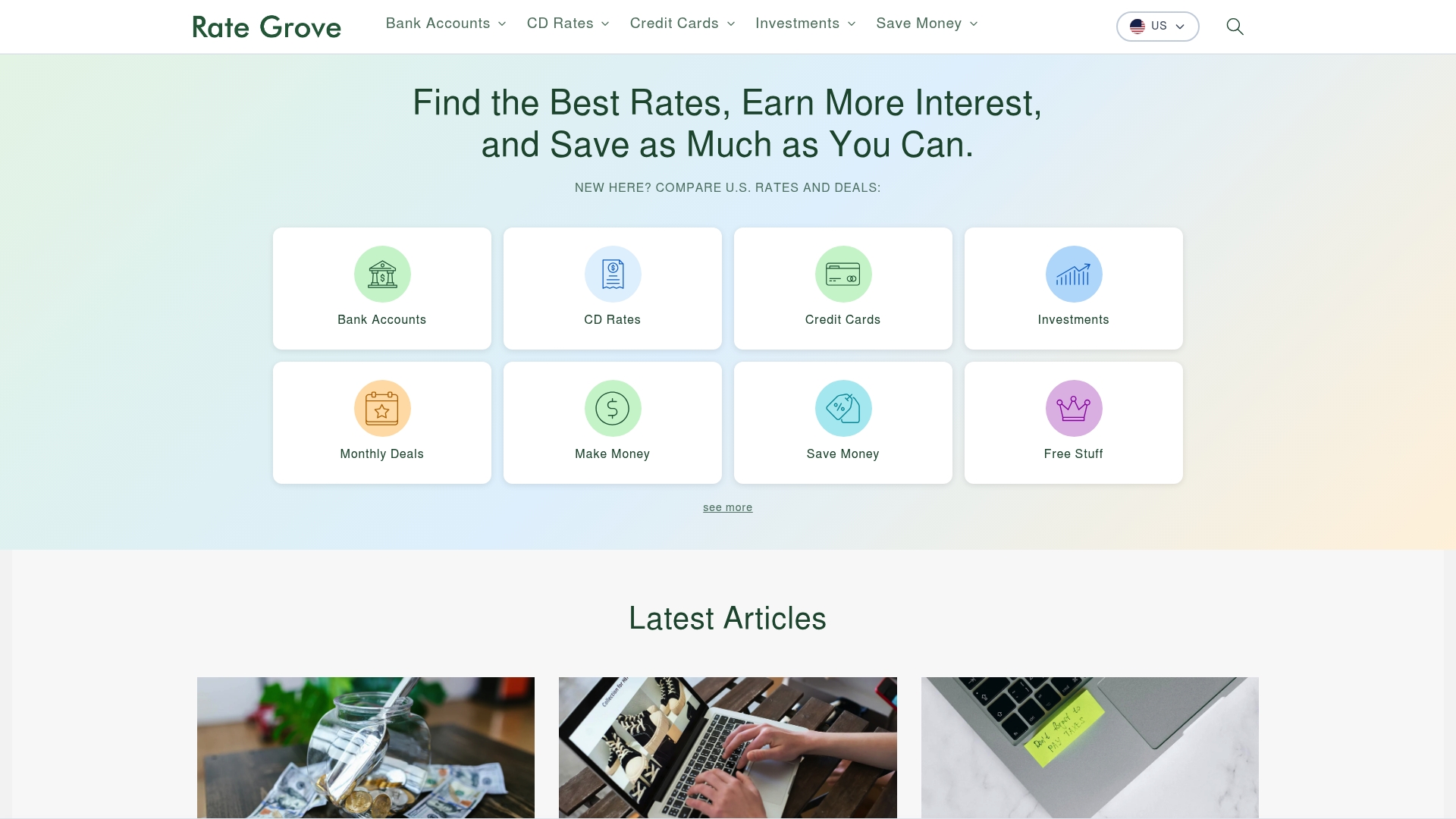
Whether you are building an emergency fund or saving for a large purchase, Rate Grove’s savings account comparison tool gives you current APYs, fee structures, and minimum balance requirements in one place. The guides are updated monthly, so you are always working with current data rather than rates that expired six months ago. Comparing your options before opening an account is the single fastest way to make sure you are not leaving money on the table.
FAQ
What is the highest APY available on a savings account right now?
As of june 2026, top-tier high-yield savings accounts offer up to 5.00% APY. Varo is among the providers currently advertising that rate for qualifying customers.
Are high-yield savings accounts safe?
Yes. HYSAs at banks are insured by the FDIC, and those at credit unions are insured by the NCUA, both up to $250,000 per depositor per institution. Your principal is protected regardless of market conditions.
How long does it take to open a high-yield savings account?
Most online HYSAs take about 15 minutes to open and require a government-issued ID, your Social Security number, and an initial deposit as low as $0.
Can I use a high-yield savings account as my emergency fund?
Yes, but account for the transfer delay. Electronic transfers between banks typically take 24–48 hours to clear, so keep a small cash buffer in a checking account for truly immediate needs.
What is the difference between a HYSA and a money market account?
A HYSA typically offers a higher APY with no minimum balance requirement. A money market account often includes check-writing and debit card access but usually requires a higher minimum balance and may pay a slightly lower rate.