

Comparison shopping in banking means evaluating multiple financial products across different institutions to find the best value for your money, not just the lowest advertised rate. The CFPB defines this as comparing fees, rates, terms, and features together before committing to any account or loan. Two quick checks you can run right now:
- Verify deposit insurance: Use FDIC BankFind to confirm any bank is FDIC-insured, or the NCUA locator for credit unions. Deposits are protected up to $250,000 per depositor.
- Compare the fee pair: Look at the monthly maintenance fee plus the out-of-network ATM fee together. That combination often costs more annually than a slightly lower APY saves you.
TL;DR: Banking comparison shopping is a structured way to pick the account that fits your actual habits and costs you the least over time.
Table of Contents
- What does comparison shopping in banking cover?
- Which criteria actually matter most when you compare banks?
- How do you comparison-shop for a bank account, step by step?
- Where can you find trusted tools and official sources?
- What pitfalls and hidden fees erase your apparent savings?
- A quick decision checklist to score your finalists
- What should you do right after reading this?
- Key Takeaways
- Why chasing the highest rate is the wrong goal
- Rate Grove makes verified comparisons faster
- Useful sources
What does comparison shopping in banking cover?
The practice applies to nearly every product a bank or credit union offers. Products you should include:
- Checking accounts (personal, interest-bearing, student)
- Savings accounts and high-yield savings accounts
- Money market accounts
- Certificates of deposit (CDs)
- Mortgages and home equity products
- Auto loans and personal loans
- Credit cards
- Specialty accounts (youth accounts, senior accounts, business checking)
Feature categories to evaluate across all of them:
- Monthly maintenance fees and how to waive them
- APY for deposit accounts; APR for loans and credit cards
- Minimum opening deposit and ongoing balance requirements
- ATM network size and out-of-network ATM fees
- Overdraft and NSF fees
- Digital banking quality (mobile app, mobile deposit, alerts)
- Branch and in-person service availability
- Account terms and restrictions (CD early-withdrawal penalties, promotional rate expirations)
- Customer service hours and dispute resolution
One important note on loans and credit cards: advertised APRs are often the best-case rate. Your actual rate depends on your credit profile, so treat loan comparisons as a starting point, not a final number.
Which criteria actually matter most when you compare banks?
Prioritize in this order, adjusting for your own habits:
- Monthly maintenance fee and waivers. A $12/month fee erases most of the benefit from a modestly higher APY. Check whether the waiver condition (direct deposit, minimum balance) is realistic for you. Rate Grove’s guide on how banks calculate monthly fees breaks down exactly how these charges are assessed.
- APY (savings/CDs) or APR (loans/credit cards). Higher APY matters most when you carry a large balance. For loans, even a 0.5% APR difference compounds significantly over a multi-year term.
- ATM network and out-of-network fees. If you withdraw cash weekly, out-of-network fees can add up significantly over the year. Prioritize banks with large surcharge-free networks or ATM fee reimbursements.
- Overdraft and NSF fees. These can run $25–$35 per incident at some institutions. If you occasionally run close to zero, this line item should rank higher than APY in your comparison.
- Minimum opening and ongoing balance requirements. Some accounts require $500 or more to avoid fees or earn the advertised rate.
- Digital banking quality. For most routine users, a strong mobile app (instant transfers, mobile deposit, real-time alerts) matters more than branch proximity.
- Branch and ATM access. If you handle cash regularly or need in-person service, a digital-only bank may not fit your life regardless of its APY.
- Account terms and restrictions. CD early-withdrawal penalties vary widely. Promotional APYs on savings accounts often expire, reverting to a much lower standard rate.
- Customer service and dispute resolution. Check hours, live-chat availability, and response times before you need them.
Pro Tip: Calculate the “total cost of ownership” for any account by adding likely monthly fees, projected ATM fees, and estimated overdraft costs, then subtract the interest you’d realistically earn. That net figure is what the account actually costs or pays you each year.
A high APY headline can look great until you factor in a $15 monthly fee and $3.50 ATM charges. An account paying 0.3% less in APY but charging zero fees often puts more money in your pocket by December.
How do you comparison-shop for a bank account, step by step?
Follow this workflow. The whole process takes under two hours the first time.
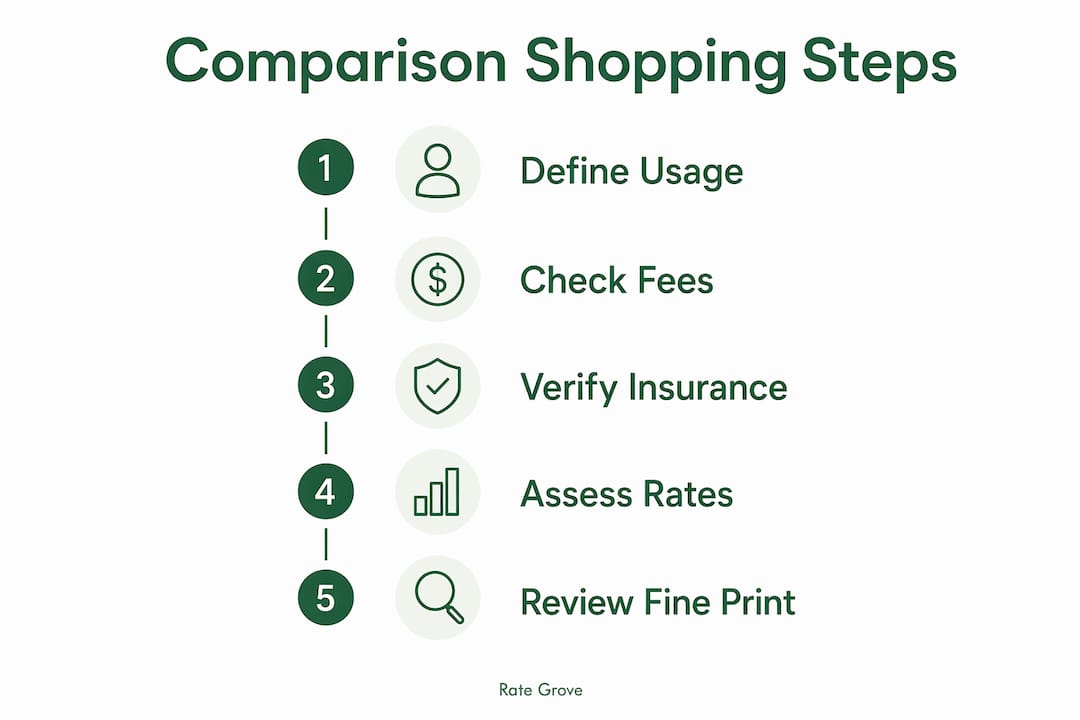
- Define your needs (5–10 minutes). Write down your typical monthly balance, how often you use ATMs, whether you need branches, and your top two or three must-have features.
- Collect candidate accounts (10–30 minutes). Use a verified aggregator or Rate Grove to pull a shortlist of accounts that match your criteria. Aim for three to five candidates.
- Fill a short comparison table (15–20 minutes). Use the bank account comparison checklist to record monthly fee, APY/APR, ATM fee, overdraft fee, and minimum balance for each option side by side.
- Verify FDIC or NCUA insurance (5–10 minutes). Run each institution through FDIC BankFind or the NCUA Credit Union Locator before going further. Never fund an account at an uninsured institution.
- Read the fee disclosure (10–15 minutes). Pull the account’s official fee schedule from the issuer’s website. Confirm the promotional rate expiration date, balance tiers, and any conditions attached to fee waivers.
- Test the app or call customer support (10–15 minutes). Download the app and check mobile deposit and transfer features. Call or chat with support once to gauge response time.
- Open and set up the account (30–60 minutes). Most online accounts open in under 10 minutes. Budget extra time to set up direct deposit and transfer any automatic payments.
Quick checklist to use while comparing:
- [ ] Monthly maintenance fee and waiver condition noted
- [ ] APY or APR confirmed from issuer’s own site
- [ ] ATM network size and out-of-network fee recorded
- [ ] Overdraft/NSF fee confirmed
- [ ] Minimum opening deposit meets your budget
- [ ] FDIC or NCUA insurance verified
- [ ] Promotional rate expiration date noted
- [ ] Mobile app reviewed and tested
- [ ] Customer service hours confirmed
Example: A consumer who keeps a $2,000 balance and withdraws cash twice a week should weight ATM fees heavily. A no-fee online savings account with a large ATM reimbursement policy likely beats a slightly higher APY at a bank with $3.50 out-of-network charges.
Where can you find trusted tools and official sources?
- FDIC BankFind Suite: Verify any bank’s FDIC insurance status and view basic financial data.
- NCUA Credit Union Locator: Confirms NCUA insurance for credit unions. Available at ncua.gov.
- Consumer Financial Protection Bureau (CFPB): Consumer guides on comparing financial products, reading disclosures, and filing complaints. The CFPB frames comparison shopping as a core consumer-protection practice.
- Rate Grove: Monthly-updated, issuer-verified comparisons for bank accounts, CDs, and credit cards. Highlights non-obvious fees and tiered-rate structures so you don’t have to dig through each bank’s fine print manually.
Verification note: Aggregator data is a starting point. Always cross-check the rate and fee figures you find on any comparison site against the issuer’s own current fee schedule before moving money. Rates change, and a site updated last quarter may not reflect today’s terms.
What pitfalls and hidden fees erase your apparent savings?
Watch for these red flags when you compare options:
- Promotional APYs that expire. A teaser rate on a savings account can revert to a much lower standard rate after the promotional period ends. Always check what the ongoing rate is.
- Balance-tiered rates you can’t realistically maintain. Some accounts advertise a top APY only on balances above $25,000.
- High out-of-network ATM fees. These can quietly cost more per year than the difference in APY between two accounts. See how bank fees on small balances compound over time.
- Overdraft and NSF fees. A single overdraft at a high-fee bank can cost as much as a month of interest earned.
- Confusing or buried fee disclosures. If you can’t find the fee schedule in under two clicks on the bank’s website, that’s a warning sign.
- Limited customer support hours. A bank with no weekend support or no live chat can leave you stuck when something goes wrong.
- No FDIC or NCUA coverage. Some fintech apps hold funds at partner banks. Confirm the underlying institution is insured, not just the app.
A “free” checking account with typical out-of-network ATM and overdraft fees isn’t actually free. Multiple ATM withdrawals and occasional overdrafts each month can add up to a substantial annual cost.
For promotional bonuses, read the fine print: note the minimum deposit required, the spending threshold, and the date the bonus posts. If the conditions aren’t maintainable, the bonus isn’t worth chasing.
A quick decision checklist to score your finalists
Score each item 0 (poor fit), 1 (acceptable), or 2 (ideal) for each account you’re considering:
- [ ] Monthly fee is $0 or easily waivable — score: ___
- [ ] APY/APR is competitive for your balance tier — score: ___
- [ ] ATM network covers your typical locations — score: ___
- [ ] Overdraft fee is low or avoidable — score: ___
- [ ] Minimum balance is within your comfort range — score: ___
- [ ] Mobile app has mobile deposit and real-time alerts — score: ___
- [ ] FDIC or NCUA insurance confirmed — score: ___
- [ ] Customer service hours fit your schedule — score: ___
Scoring: A total of 14–16 is a strong fit. Below 10, keep looking. When two accounts tie, favor the one with lower total annual cost and confirmed deposit insurance.
What should you do right after reading this?
Three actions you can take today:
- Run the two quick checks (5 minutes). Verify FDIC or NCUA status for any account you’re already considering, and pull the monthly fee plus ATM fee for each. This alone often surfaces a clear winner or loser.
- Build your comparison table (20–30 minutes). Use the checklist above or the Rate Grove comparison guide to record the five core criteria for three to five candidate accounts side by side.
- Save your comparison snapshot (2 minutes). Screenshot or bookmark the rate and fee pages from each issuer’s site. Rates change, and having a dated record helps if you want to renegotiate or verify later.
Before you fund any account, confirm FDIC or NCUA insurance one more time through the official regulator tool, not the bank’s own marketing page.
Key Takeaways

Comparison shopping in banking requires verifying deposit insurance, measuring total cost (fees plus APY), and using verified data sources to make a confident, well-informed decision.
| Point | Details |
|---|---|
| Verify insurance first | Confirm FDIC or NCUA coverage via official regulator tools before funding any account. |
| Measure total cost | Add monthly fees, ATM fees, and overdraft costs, then subtract realistic interest earned to find the true net cost. |
| Look past the headline rate | A lower APY with zero fees often beats a higher APY tied to unrealistic balance tiers or expiring promotions. |
| Re-check periodically | Rates and fee structures change; revisiting your comparison quarterly keeps you from overpaying by habit. |
| Rate Grove for verified data | Rate Grove’s monthly-updated, issuer-verified comparisons surface non-obvious fees and tiered rates in one place. |
Why chasing the highest rate is the wrong goal
The conventional wisdom in personal finance tells you to find the highest APY and move your money there. That advice is incomplete, and for many consumers it actively costs money.
The accounts with the most eye-catching rates often come with balance tiers most people can’t sustain, promotional windows that expire quietly, or fee structures that claw back the interest advantage within a few months. A periodic re-evaluation of your banking options matters far more than a one-time rate hunt.
What actually works is a short, repeatable workflow: define your real usage habits, measure total cost rather than headline APY, verify insurance, and re-run the comparison every quarter or whenever your financial situation shifts. The goal isn’t the highest number on a rate table. It’s the account that costs you the least and fits how you actually bank.
Rate Grove makes verified comparisons faster
Sorting through fee schedules, balance tiers, and promotional fine print across a dozen banks takes hours you probably don’t have. Rate Grove cuts that time down significantly by pulling monthly-updated, issuer-verified data on bank accounts, CDs, and credit cards into a single side-by-side view.
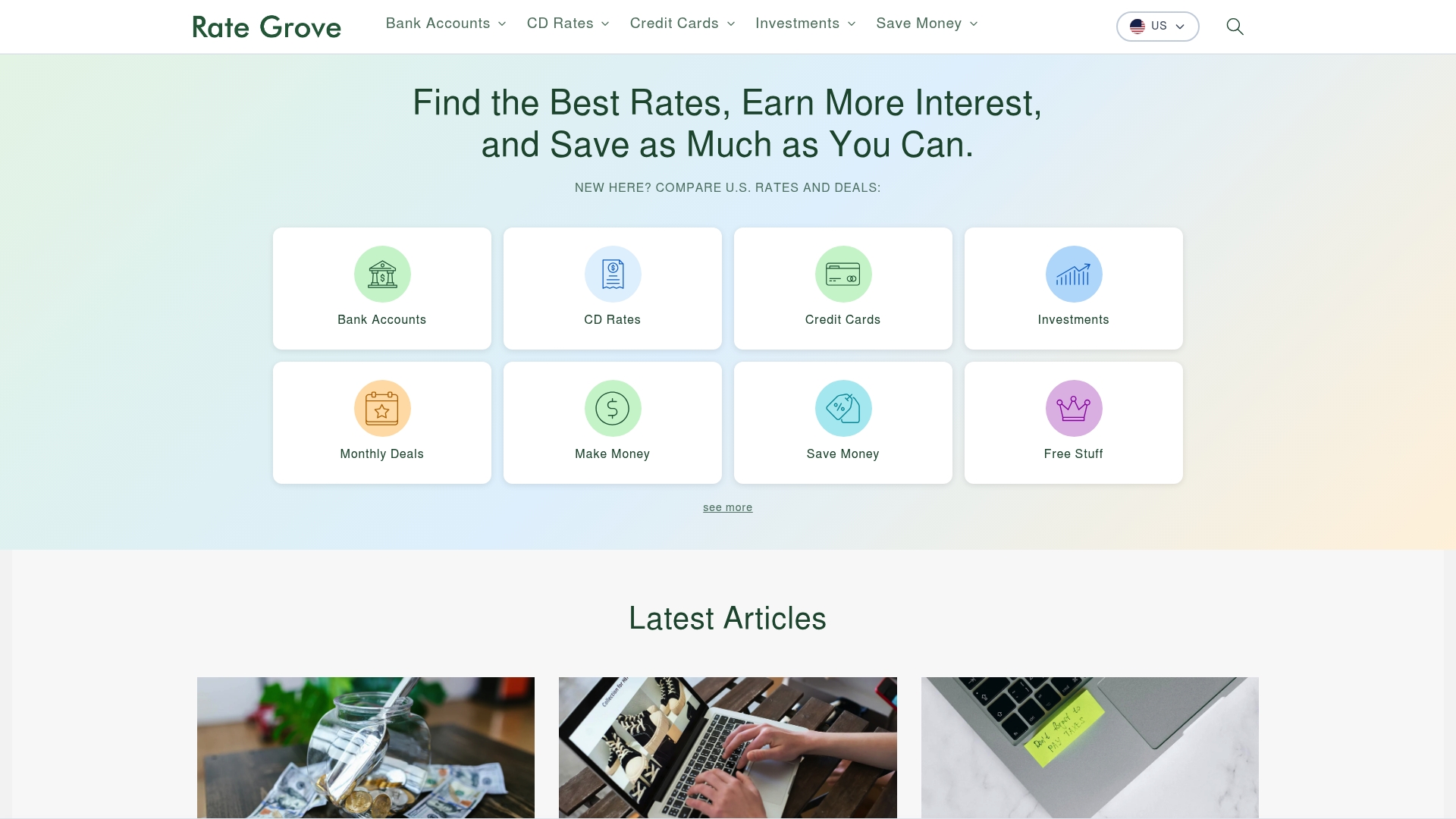
Every comparison on Rate Grove is fact-checked against issuer and regulator sources, so you see the real fees and tiered rates, not just the advertised headline. Non-obvious costs like inactivity fees, paper statement charges, and balance-tier thresholds are flagged directly in the comparison. It’s built for consumers who want a clear answer quickly, without wading through marketing copy.
Ready to find the account that fits your habits and costs you less? Compare bank accounts on Rate Grove and cross-check your top pick against the issuer’s own fee disclosure before moving any funds.
Useful sources
- Consumer Financial Protection Bureau (CFPB): Consumer guides on comparing financial products, reading fee disclosures, and understanding your rights.
- FDIC — Federal Deposit Insurance Corporation: Official guidance on deposit insurance, how to verify coverage, and criteria for evaluating banks.
- FDIC BankFind Suite: Look up any bank’s insurance status and basic financial data directly from the regulator.
- MoneyRates: Analysis on re-evaluating banking options and why periodic comparison shopping pays off in a dynamic rate environment.
- CoursePivot — What Is the Purpose of Comparison Shopping?: Plain-language explanation of comparison shopping as a financial decision-making practice.
Always cross-check any aggregator’s figures against the issuing bank or credit union’s current fee schedule. When verifying deposit insurance, use the FDIC or NCUA lookup directly rather than relying on a bank’s own marketing materials.