

Open your new account first, get online access working, then move your direct deposit before touching anything else. Update recurring payments next, keep your old account open for a few weeks buffer period, and only close it once no activity hits it for at least one full cycle. Skip a step, and you risk a bounced payment or an overdraft on an account you thought you were done with.
TL;DR:
- Ensure the new account is fully verified and set up with online banking and a debit card before initiating any transfers or updates.
- Move your paycheck first and update direct deposit details at least one full payroll cycle in advance to avoid missing payment deadlines.
- List all recurring payments from the old account and update high-risk payees like loans, utilities, or rent before closing the old account.
- Keep both accounts open for several weeks during the transition to allow delayed transactions to clear and catch any missed payments.
- Close the old account only after confirming it has a zero balance and no pending transactions for at least one full statement cycle.
Table of Contents
- How Do I Switch Bank Accounts Step by Step?
- Opening the New Account: What to Bring and Set Up
- Moving Your Direct Deposit Without Losing a Paycheck
- Finding and Updating All Your Recurring Payments
- Transferring Funds and Setting Your Overlap Window
- Closing the Old Account Without Getting Burned
- How Long Does Switching Banks Actually Take?
- Why Trust This Switching Checklist
- A Few Things Most Checklists Skip
- Pick the Right Account Before You Start the Switch
- Where to Go for Official Guidance
- Sources
- FAQ
How Do I Switch Bank Accounts Step by Step?
A switch works best as a sequence, not a scramble. Do the steps out of order and you risk a rent payment bouncing or a paycheck landing nowhere. Here’s the order that actually holds up:
- Open and verify the new account. Confirm your login works, your debit card arrives, and you can see your balance before moving anything else.
- Switch direct deposit. Submit the new routing and account numbers to your employer or benefits provider, then confirm your next paycheck actually lands there.
- Update payees by risk level. Start with rent, utilities, and loan payments. Save streaming subscriptions for last.
- Move your money, but leave a buffer. Transfer most of your balance while keeping enough behind to cover anything still pending.
- Watch both accounts. Check daily at first, then weekly, until the old one goes quiet.
- Close the old account. Only after it shows zero balance and zero pending activity for a full cycle.
Opening the New Account: What to Bring and Set Up
Most banks ask for a government-issued photo ID, your Social Security number, and a physical address. Some also want a second ID or an opening deposit, so check the requirements before you show up or start an online application.
Once the account is open, do these three things before you touch your old bank:
- Set up online banking and the mobile app, and turn on two-factor authentication.
- Order your debit card, activate it, and set your PIN right away.
- Confirm the minimum balance rules and any monthly fees so you know exactly what keeps the account free.
Don’t pick a bank purely for a cash bonus. The CFPB’s account-opening checklist specifically warns readers to weigh long-term fees and terms against one-time perks. A signup bonus that comes with a $25 monthly maintenance fee isn’t a win, it’s a slow leak.
Pro Tip: Screenshot your new account’s routing and account numbers the day you open it. You’ll need them for every deposit and payment form you fill out over the next two weeks.
Moving Your Direct Deposit Without Losing a Paycheck
Your paycheck is the first thing to move, and it’s usually the slowest. Payroll systems often need a full cycle to process a change, so don’t wait until the last minute.
Contact anyone who deposits money into your account directly:
- Your employer’s payroll or HR department.
- The Social Security Administration or any other agency paying benefits.
- Freelance platforms, gig apps, or clients who pay you by direct deposit.
Most of these require your new routing number and account number, sometimes on a specific direct-deposit form rather than a verbal request. Give it one or two full pay cycles before assuming something’s wrong, and always confirm the deposit actually landed by checking your new account, not just trusting a confirmation email. Keep a copy of every form you submit. If a deposit goes missing, that paper trail is what gets it fixed fast.
Finding and Updating All Your Recurring Payments
This is the step people underestimate, and it’s where switches go wrong. Pull up two to three months of statements from your old account and list every recurring charge you find. Anything you forget is a payment that quietly keeps hitting a shrinking balance.
Split what you find into two categories:
- Push payments — you initiate these through bill pay or a transfer, so you control when they move. Update the account and you’re done.
- Pull payments — a company like a utility or lender withdraws money automatically, so you have to update your card or account details directly with them, not just at your old bank.
Tackle the highest-risk ones first: mortgage or rent, car loans, insurance, and utilities. A missed insurance payment or loan withdrawal can trigger fees or worse, so those come before your gym membership or streaming apps. After updating each payee, watch for one successful charge against the new account before crossing it off your list. Forbes Advisor’s switching guide follows this same research sequence: open, move, update, buffer, close. It holds up because it front-loads the risky stuff.
Transferring Funds and Setting Your Overlap Window
Move most of your balance to the new account, but don’t drain the old one to zero. Pending checks, delayed debit holds, and pull payments that haven’t caught up yet can all still hit that account for days or even weeks after you think you’re finished.
Keep both accounts open for several weeks. That window gives slow-moving transactions time to clear and gives you a chance to catch any payee you missed. The FDIC points out there’s no automated system that handles this transition for you, so the overlap period is really your only safety net.
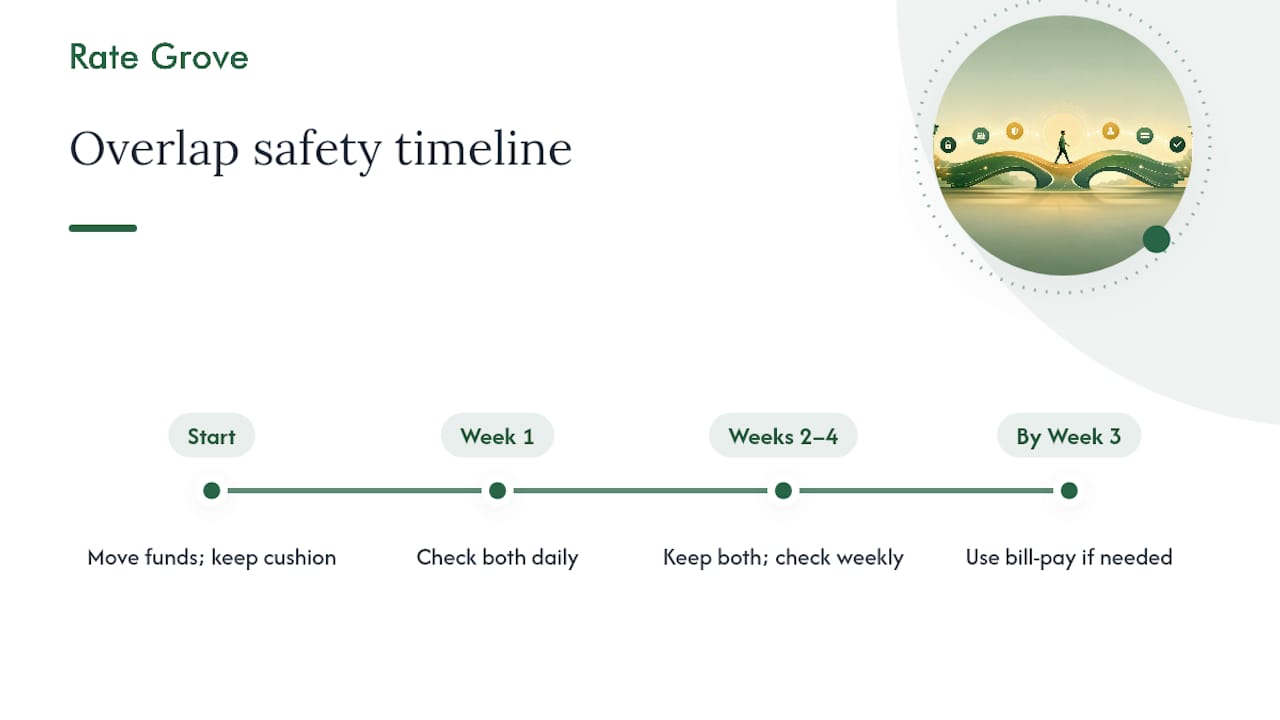
Check both accounts daily for the first week, then taper to weekly once things settle down. If a returned check or a surprise debit shows up on the old account, don’t panic. Just make sure there’s enough cushion left to cover it while you sort out why it came through late.
Pro Tip: If a bill collector or subscription service still hasn’t switched over by week three, use your old bank’s bill-pay feature to cover that one payment manually rather than risking a late fee while you chase down the update.
Closing the Old Account Without Getting Burned
Don’t close anything until the account shows a genuine zero balance and zero pending transactions for at least one full statement cycle. Closing too early is how people end up with a surprise overdraft fee on an account they thought was empty.
When you’re ready:
- Transfer any remaining balance to your new account or request a check for it.
- Ask for written confirmation that the account is closed, not just a verbal assurance from a teller.
- Shred old checks and cut up the debit card once you have that confirmation.
- Keep your final statement for tax records or in case a dispute comes up later.
If the account somehow reopens on its own or a mystery fee appears, call the bank immediately and ask them to reverse it in writing. If they won’t, that’s when you escalate.
How Long Does Switching Banks Actually Take?
Most people finish the whole process in two to four weeks. Opening the account and getting set up takes a few days. Direct deposit and recurring payments take longer, because they’re tied to billing cycles and payroll schedules you don’t control. Consumer Reports recommends leaving the old account open through this entire window and even suggests using its bill-pay feature to bridge any gaps.
A few common snags and how to handle them:
- Missed direct deposit. Confirm your employer has the correct account and routing numbers, and ask HR for written proof they updated it.
- A payee still charging the old account. Contact that company directly. Updating your bank doesn’t update their records automatically.
- A fee or dispute you can’t resolve. File a complaint with the Consumer Financial Protection Bureau if your bank won’t fix it after you’ve asked in writing.
None of this touches your credit score directly. Opening a checking account isn’t reported to credit bureaus the way a credit card or loan is, so switching banks on its own won’t move your credit history one way or the other.
Why Trust This Switching Checklist
The account comparisons referenced here are updated monthly and fact-checked against issuer and regulator data before publishing. The guidance here draws on that same standard, cross-checked against FDIC and CFPB consumer guidance rather than marketing copy. Before you execute any step in this checklist, use Rate Grove’s bank account comparison checklist to shortlist the account you’re actually switching to.
A Few Things Most Checklists Skip
Negotiate before you leave. Banks would rather waive a fee than lose your balance, so ask before you close anything. Lean on push payments wherever you can. You control the timing, not the payee, which matters most during the messy middle weeks of a switch. And don’t be afraid to use your old bank’s bill-pay as a stopgap. It’s not cheating. It’s just good sequencing.
— Mat C.
Pick the Right Account Before You Start the Switch
None of this checklist matters much if you switch into the wrong account. Fees, APY, and minimum balance rules are compared side by side across checking and savings accounts, with comparisons refreshed every month against issuer and regulator data rather than marketing pages.
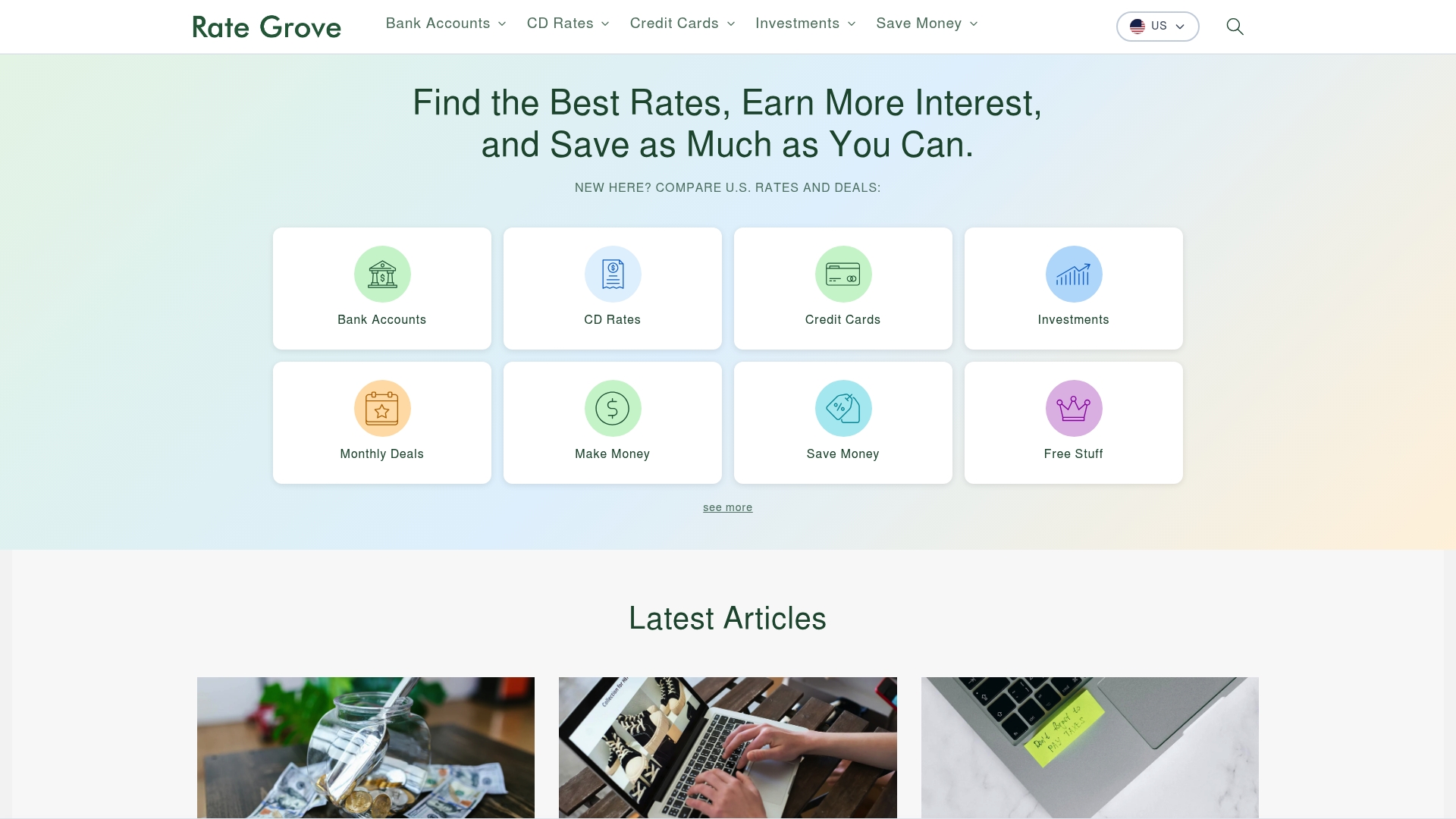
Start on the Rate Grove landing page to shortlist two or three accounts that fit your actual balance and spending habits, not just the one with the flashiest signup offer. Once you’ve picked one, come back to this checklist and run through it step by step. Check current rates and offers on the relevant comparison website before you open anything.
Where to Go for Official Guidance
For the government’s own take on switching, read the FDIC’s consumer guidance and the CFPB’s account-opening checklist. For extra detail on linking accounts and minimum deposits, Experian’s guide covers additional practical checks.
This article is general information, not a substitute for advice from a qualified financial advisor. Consult a qualified financial professional about your own circumstances before acting on anything here.
Sources
FAQ
What Banks Will Pay You to Switch?
Many banks run limited-time signup bonuses for opening a new checking account with qualifying direct deposits, but offers change constantly. Check current signup bonus offers before choosing based on the bonus alone, since fees can erase the value fast.
What Is the $3,000 Rule for Banks?
Some signup bonus offers require a qualifying direct deposit of a set amount within a certain window to unlock the reward. Terms vary widely by bank and offer, so always read the fine print before assuming you qualify.
What Are the Best Bank Accounts to Switch To?
The best account depends on your balance, spending habits, and how much you want to pay in fees. Rate Grove’s checking account comparison guide weighs long-term rates and fees rather than short-term promotions, which tends to matter more over a full year.
What’s the Easiest Way to Switch Banks?
Open the new account first, move your direct deposit, then update recurring payments while keeping the old account open for two to four weeks. This staged approach, confirmed across guidance from the FDIC and Forbes Advisor, avoids the missed payments that make switching feel harder than it is.
Will Switching Bank Accounts Hurt My Credit Score?
No. Opening or closing a checking account typically isn’t reported to credit bureaus, so it has no direct impact on your credit history or score.