

Pay your statement balance in full by the due date to avoid interest, since that’s the billed amount your issuer locks in at the end of your billing cycle. Your current balance is the live, moving total that includes anything you’ve charged since that cycle closed, and paying it down helps free up available credit, but it won’t stop interest on its own if the statement balance goes unpaid.
TL;DR:
- Paying the statement balance in full by the due date avoids interest charges, as it is the fixed amount locked in at the end of each billing cycle.
- The current balance fluctuates throughout the month, reflecting real-time activity such as new purchases, payments, and fees, unlike the static statement balance.
- To optimize credit utilization ratios and credit scores, pay down the current balance before the statement closes and confirm reporting dates with your issuer.
- Paying only the minimum due on the statement balance can lead to interest accrual and loss of the grace period, affecting both costs and credit score reporting.
- Double-check that autopay settings and payment posting times align with your intended balance to avoid surprises, especially when managing multiple balances.
Table of Contents
- Statement Balance vs Current Balance: The Core Difference
- What Is a Current Balance and Why Does It Keep Changing?
- Which Balance Should You Actually Pay?
- How Your Balance Choice Affects Your Credit Score
- A Simple Timeline: Statement vs Current Balance in Action
- Where to Check Each Balance and How to Pay Correctly
- Quick Takeaways for This Month
- Why New Cardholders Get This Backwards
- Find the Right Card and Tools on Rate Grove
- Sources
Statement Balance vs Current Balance: The Core Difference
Your statement balance is the number your issuer freezes at the close of each billing cycle, and it’s the figure that determines both your minimum payment and whether you’ll owe interest. It includes every posted transaction from that cycle, any unpaid balance carried over from before, plus fees and interest charges that landed before the closing date.
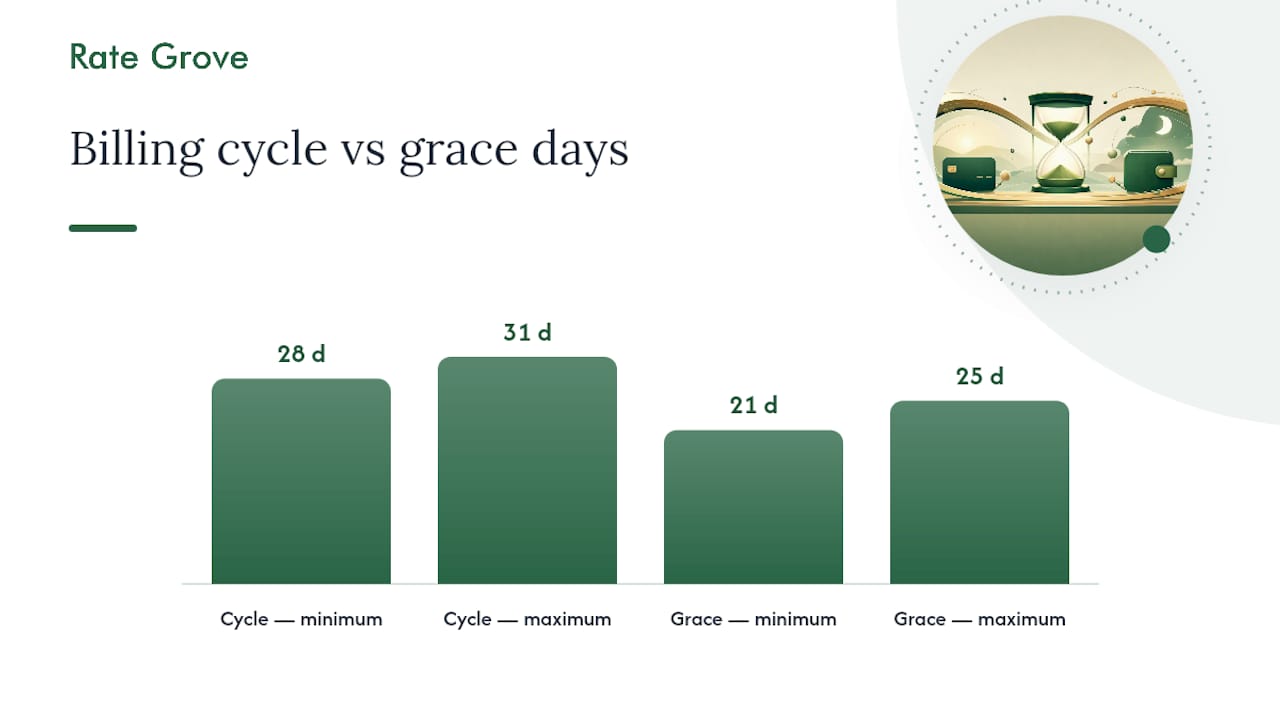
Most cards run on a 28 to 31 day billing cycle, and your due date usually falls 21 to 25 days after that statement closes. That gap is your grace period, and federal rules require a minimum period between when your statement goes out and when payment is due. Paying the full statement balance by that due date keeps the grace period intact for next cycle too.
A few things worth remembering about your statement balance:
- It’s a fixed snapshot, not a moving target. It doesn’t change after your cycle closes.
- It’s the number your minimum payment is calculated from, usually a percentage of it or a flat dollar floor, whichever is higher.
- It appears on your statement closing date and stays the same until your next cycle ends.
What Is a Current Balance and Why Does It Keep Changing?
Your current balance is the running total on your account right now, including everything posted since your last statement closed. Check it at 9 a.m. and again at 4 p.m. after a big purchase, and you’ll see two different numbers.
This is a real-time figure, and Discover’s explainer on the topic notes it fluctuates constantly as new activity posts. A few triggers you’ll notice:
- New purchases add to it immediately once they post.
- Payments and returns subtract from it right away.
- Interest and late fees, if they hit, get added in too.
Pending transactions add a wrinkle. A hotel hold or a gas station pre-authorization might not show up in your current balance yet, but it can still shrink your available credit. If you haven’t spent or paid anything since your statement closed, your current balance and statement balance will match exactly. The moment you swipe your card again, they split apart.
Which Balance Should You Actually Pay?
Here’s the order of operations that keeps you interest-free and your credit score healthy:
- Pay the statement balance in full by the due date. This is the single move that avoids interest charges, assuming your card offers a grace period on purchases.
- Pay down your current balance before your next statement closes if you want to lower the number that gets reported to the credit bureaus, or if you need more available credit for an upcoming purchase.
- Never settle for just the minimum payment unless you have no other option. Chase’s guidance on this is blunt: paying less than the full statement balance means interest starts accruing on the unpaid portion, and you can lose your grace period for the next cycle too.
A smart routine: set autopay for the full statement balance so you never miss a due date, then make a second, smaller payment mid-cycle if you’re carrying a heavy load and want to free up room. Just double check when payments actually post. A payment made the same day rarely counts instantly.
Pro Tip: Autopay defaults often aren’t set to “statement balance” out of the box. Open your account settings and confirm which figure autopay is pulling before you assume you’re covered.
How Your Balance Choice Affects Your Credit Score
Here’s something a lot of new cardholders miss: issuers typically report the statement balance to the credit bureaus shortly after your cycle closes, not a constantly updating current balance. That reported number is what shapes your credit utilization ratio.
Utilization is your reported balance divided by your credit limit, and it’s one of the heavier-weighted factors in most scoring models. A few tactics worth building into your routine:
- Pay down your balance before the statement closes, not just before the due date, if you want a lower number reported.
- Ask your issuer when it reports to the bureaus, since reporting dates vary by issuer and this timing matters if you’re applying for a mortgage or auto loan soon.
- Keep your reported utilization low across all your cards, not just the one you use most.
Utilization typically makes up roughly 30% of many scoring models, which is why a well-timed mid-cycle payment can move your score faster than people expect.
A Simple Timeline: Statement vs Current Balance in Action
Picture a card with a $2,000 limit and a billing cycle closing on the 10th of the month.
- March 10 (statement closes): Your statement balance locks in at $800. Your payment due date will be several weeks after that.
- March 15: You buy a $200 laptop bag. Your current balance jumps to $1,000, but your statement balance stays $800.
- April 4, Option A (pay in full): You pay $800. Interest: $0. Your $200 laptop bag charge rolls into next month’s statement.
- April 4, Option B (pay minimum only, say $40): Interest starts accruing on the remaining $760, and your grace period is gone next cycle.
- March 20, Option C (pay the $1,000 current balance early): Utilization reported in April drops sharply, and you free up nearly full credit line before the next cycle even closes.
Where to Check Each Balance and How to Pay Correctly
Your paper or PDF statement always shows the statement balance, frozen as of your closing date. Your issuer’s app or online dashboard shows the current balance, along with any pending transactions still working their way through.
Before you hit “pay,” run through this short checklist:
- Confirm your due date on the statement or app home screen.
- Check which field the pay button will actually submit. Some default to minimum payment, others to statement balance or current balance.
- Verify how long payments take to post, since same-day posting isn’t guaranteed everywhere.
Pro Tip: American Express notes that payment screens don’t always default to the same number. Always glance at the pre-filled amount before you confirm, since paying current balance when you meant to pay statement balance (or vice versa) is an easy slip.
Quick Takeaways for This Month
Three habits will keep you interest-free and your utilization low without much extra effort.
| Action | Why it matters | When to do it |
|---|---|---|
| Pay statement balance in full | Avoids interest and keeps your grace period | By the due date, every cycle |
| Pay down current balance | Frees up available credit for upcoming purchases | Whenever you need more room |
| Pay before statement closes | Lowers the balance reported to credit bureaus | A few days before your closing date |
Double check your autopay settings and posting windows this week. A five-minute review now saves you a surprise interest charge later.
Why New Cardholders Get This Backwards
Most new cardholders assume paying “whatever the app shows” is enough, and that’s exactly where the confusion starts. The current balance looks more urgent because it’s the bigger, more current-feeling number, so people gravitate toward it and assume they’re covered. In reality, the statement balance is the one your issuer cares about for interest calculations, and ignoring it in favor of the current balance is how otherwise responsible people end up paying interest for the first time without understanding why.
The bigger blind spot, though, is timing your payment around utilization rather than just the due date. Plenty of financially disciplined people pay their statement balance in full every month and still watch their score dip before a mortgage application, simply because they didn’t think about when their issuer reports to the bureaus. Rate Grove built its comparison guides around exactly this kind of timing gap, because the rate or rewards on your card matters far less if you’re mismanaging the two numbers that actually control your cost of borrowing and your score.
If there’s one habit worth building early, it’s checking your statement closing date on the calendar the same way you’d check a bill due date. That’s the lever most new users never touch.
— Mat C.
Find the Right Card and Tools on Rate Grove
Choosing a card with a real grace period, no hidden fee traps, and rewards that fit how you actually spend matters just as much as knowing which balance to pay. Rate Grove’s side-by-side comparisons pull verified data straight from issuer and regulator sites, so you’re not stuck cross-referencing five different bank pages to figure out billing cycle rules or interest terms.
Rate Grove’s monthly-updated guides cover everything from how credit card interest actually accrues to which cards offer the longest grace periods for new users. If you want to run the math on what carrying a balance would actually cost you, Mali’s payoff calculator is a solid tool for testing different payment scenarios before you commit. Head to Rate Grove to compare current card offers and find the guide that matches where you are in your credit journey.
Sources
For deeper detail on billing rules, grace periods, and reporting timing, issuer education pages are the most reliable primary sources. Experian, Discover, Chase, and American Express each break down their own billing mechanics, while the FDIC covers the consumer-protection rules behind due-date timing.
This article is general information, not a substitute for advice from a qualified financial advisor. Consult a qualified financial professional about your own circumstances before acting on anything here.