

A credit score is a three-digit number, ranging from 300 to 850, that represents your creditworthiness based on data in your credit report. The FICO scoring model calculates this number using five weighted categories: payment history (35%), amounts owed (30%), length of credit history (15%), credit mix (10%), and new credit (10%). Understanding how credit scores are calculated gives you a clear roadmap for improving your financial profile. The two biggest factors, payment history and credit utilization, together account for 65% of your score. That means your most impactful moves are also your most straightforward ones.
How payment history influences your credit score calculation
Payment history is the single largest factor in the credit scoring process, carrying 35% of your total FICO score. Lenders use it to answer one simple question: do you pay your bills on time? Every on-time payment strengthens your profile. Every late or missed payment chips away at it.
The three major credit bureaus, Equifax, Experian, and TransUnion, track your payment behavior across all reported accounts. These include credit cards, auto loans, student loans, and mortgages. A payment that is 30 days late gets reported to the bureaus and can drop your score noticeably. A payment that is 90 days late causes significantly more damage.
Here is what most people do not realize: the recency of a late payment matters more than the late payment itself. A single missed payment from five years ago carries far less weight than one from last month. Lenders care most about your current habits.
Practical steps to protect your payment history:
- Set up autopay for at least the minimum payment on every account
- Use calendar reminders for bills not on autopay
- If you miss a payment, pay it as soon as possible to minimize bureau reporting impact
- Contact your lender immediately after a missed payment; some will waive the late fee and delay reporting if you act fast
Pro Tip: Even one on-time payment per month on every open account builds a strong payment record over time. Consistency beats perfection.
How amounts owed and credit utilization affect your score
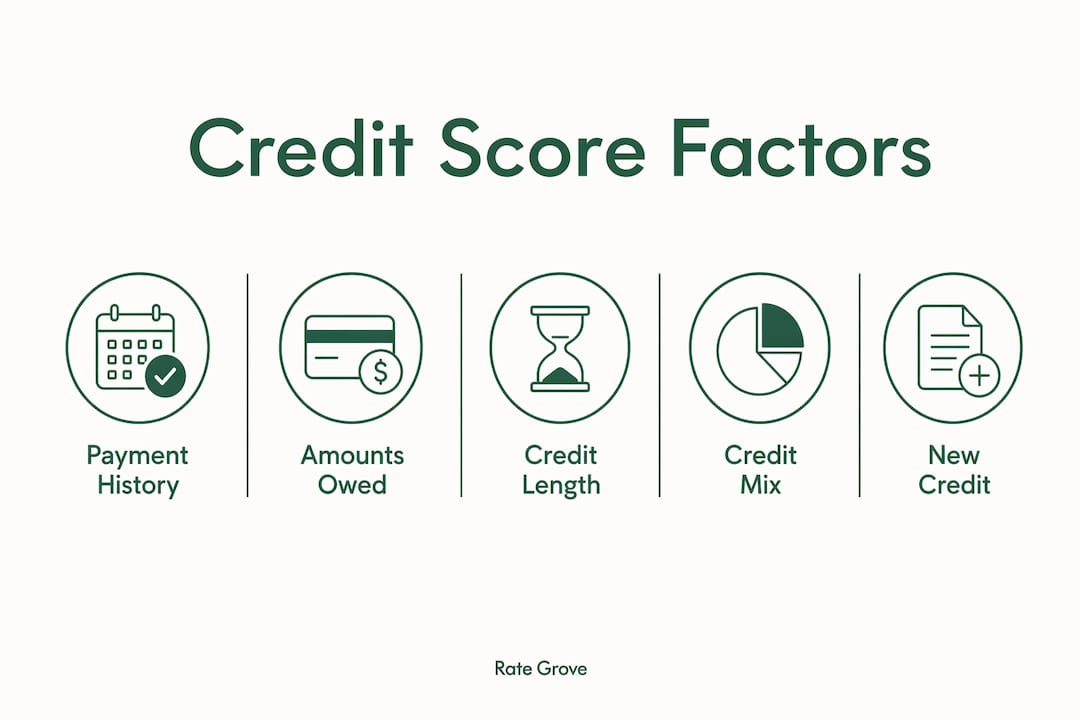
Amounts owed represent 30% of your FICO score, making it the second most influential factor in understanding credit scores. The most important piece within this category is your credit utilization ratio. That ratio is simply how much of your available revolving credit you are currently using.

Lenders prefer a utilization ratio below 30%, and a ratio under 10% is considered optimal for the highest possible score impact. If you have a $10,000 credit limit across all your cards and carry a $3,000 balance, your utilization is 30%. Bring that balance to $1,000 and your utilization drops to 10%, which can meaningfully lift your score.
Here are four concrete steps to manage your amounts owed:
- Pay down revolving balances first. Credit card debt affects utilization directly. Prioritize it over installment loans when paying extra.
- Request a credit limit increase. If your spending habits have not changed, a higher limit lowers your utilization ratio automatically.
- Make multiple payments per month. Paying mid-cycle before your statement closes can lower the balance that gets reported to the bureaus.
- Spread balances across cards. A single maxed-out card hurts more than the same total balance spread across three cards with low individual utilization.
The amounts owed category also considers how many accounts carry balances and how much you owe on installment loans relative to their original amounts. Paying down an auto loan or personal loan steadily improves this part of your profile too.
What is the impact of credit history length on your score?
Length of credit history accounts for 15% of your score. The credit scoring process looks at three specific ages: your oldest account, your newest account, and the average age of all your accounts. Older is better across all three measures.
A common mistake is closing old credit cards you no longer use. Closing an old account reduces your average account age and can raise your utilization ratio at the same time. Both effects hurt your score. The card you opened in college may feel irrelevant now, but keeping it open costs you nothing and protects your credit age.
What you should know about closed accounts:
- Positive payment history from a closed account stays on your credit report for up to 10 years
- Accounts closed in good standing continue to contribute positively during that window
- Accounts closed with negative history drop off after 7 years
- The average age of your accounts drops immediately when you open a new one, which is why new credit applications have a short-term cost
Pro Tip: Keep old cards active by making one small purchase every few months and paying it off in full. This keeps the account open, builds payment history, and costs you nothing in interest.
Does credit mix matter in calculating your credit score?
Credit mix makes up 10% of your FICO score. It measures the variety of credit types in your profile. A person with only credit cards has a thinner profile than someone who also carries an installment loan, a mortgage, or a student loan.
The types of credit that contribute to a strong mix include:
- Revolving credit: Credit cards and lines of credit
- Installment loans: Auto loans, personal loans, and student loans
- Mortgage loans: Home loans, which carry significant weight given their size and duration
A diverse credit profile signals to lenders that you can manage different types of financial obligations responsibly. That said, credit mix is the least urgent factor to chase. Opening a loan you do not need just to add variety is a poor trade. The 10% weight does not justify taking on unnecessary debt or interest costs. If a new credit type fits naturally into your financial life, it will help your score. If it does not, leave it alone.
How do new credit inquiries and accounts affect your score?
New credit accounts for 10% of your score and covers two things: how many new accounts you have opened recently and how many times you have applied for credit. Hard inquiries temporarily lower your score by a few points each. Soft inquiries, such as checking your own score or pre-qualification checks, have zero impact.
The distinction between hard and soft inquiries is one of the most misunderstood parts of the credit scoring process. Many people avoid checking their own credit out of fear it will hurt their score. It will not. Only a lender pulling your report after a formal application triggers a hard inquiry.
| Inquiry type | Who triggers it | Score impact |
|---|---|---|
| Hard inquiry | Lender, after a credit application | Temporary small drop |
| Soft inquiry | You, or pre-qualification checks | No impact |
Multiple credit applications in a short window stack up as multiple hard inquiries and can cause a noticeable temporary decline. Hard inquiries stay on your report for two years but only affect your score for the first year. That timeframe is worth knowing when you plan major purchases.
Tips for managing new credit wisely:
- Space out credit applications by at least six months when possible
- Rate-shop for mortgages or auto loans within a 14 to 45-day window; scoring models treat multiple inquiries for the same loan type as a single inquiry
- Avoid opening several new accounts in the same year, especially before applying for a mortgage
Key Takeaways
Your credit score reflects five weighted behaviors, and payment history plus credit utilization together drive nearly two-thirds of the outcome.
| Point | Details |
|---|---|
| Payment history leads | At 35% of your score, on-time payments are the single most impactful habit you can build. |
| Utilization under 30% matters | Keep revolving balances below 30% of your limit; under 10% delivers the strongest score benefit. |
| Keep old accounts open | Closing old cards lowers your average account age and raises utilization, both of which hurt your score. |
| Hard inquiries are temporary | A hard inquiry drops your score slightly for up to one year, not two, so plan applications accordingly. |
| Consistency beats quick fixes | Credit scores fluctuate monthly based on reported behavior; steady habits produce lasting improvement. |
The part most people get wrong about credit scores
I have talked with a lot of people who are frustrated that their score is not moving despite doing “everything right.” The problem is almost always the same: they are focused on the wrong factors in the wrong order.
Credit mix and new credit together make up just 20% of your score. Yet those are the factors people obsess over, opening new cards or taking out loans they do not need. Meanwhile, they are carrying a 45% utilization ratio and wondering why their score is stuck. The math does not work in their favor.
The most reliable path I have seen is boring but effective. Pay every bill on time, every month. Keep your card balances low. Do not close old accounts. Then wait. Initial improvements can appear within 30 to 45 days after positive changes, but meaningful gains take several months of consistent behavior. There is no shortcut that beats that timeline.
One more thing worth saying plainly: your score is not a grade on your character. It is a model built on reported data. If the data is accurate and your habits are solid, the score follows. Focus on the inputs you control, and the output takes care of itself.
— Mat C.
Rate Grove makes your next financial step clearer
Understanding your credit score is the first step. The next step is putting that knowledge to work by finding financial products that actually fit your profile.
Rate Grove compares credit cards, bank accounts, and CDs side by side using verified data from issuers and regulators. Every comparison includes fees, rates, and tradeoffs in plain language, so you can see exactly what you are getting before you apply. If you are working to build your credit profile and want to find a credit card that fits your current score range, Rate Grove’s monthly-updated guides give you current, fact-checked options without the noise. You can also review credit card APR factors to understand how your score affects the rates you qualify for. Start at Rate Grove to compare your options today.
FAQ
What are the five factors used to calculate a credit score?
The five FICO credit score factors are payment history (35%), amounts owed (30%), length of credit history (15%), credit mix (10%), and new credit (10%). Together they produce a score between 300 and 850.
How long does it take to improve a credit score?
You can see initial changes within 30 to 45 days after making positive changes, though significant improvement typically takes several months of consistent behavior.
Does checking my own credit score hurt it?
Checking your own score is a soft inquiry and has no impact on your score. Only hard inquiries from lenders after a formal credit application cause a temporary small drop.
What credit utilization ratio should I aim for?
Keep your utilization below 30% to maintain a good score. A ratio under 10% is considered optimal and delivers the strongest positive impact on your FICO score.
Should I close old credit cards I no longer use?
Closing old accounts lowers your average account age and can raise your utilization ratio, both of which can hurt your score. Keeping them open with occasional small purchases is the better approach.