

A stop payment fee is what your bank charges to block a specific check, ACH debit, or recurring payment before it clears. Most U.S. banks charge somewhere between $15 and $35 per request, though a few waive it for certain accounts. The fee is separate from whether the request actually works, so the moment you suspect a problem, call your bank rather than waiting to see what happens.
TL;DR:
- Stop payment fees typically range from $15 to $35, with some premium accounts waiving the charge or offering discounts for online requests.
- Timing is critical because once a check or debit posts, the bank cannot reverse the transaction, making immediate action essential.
- Requests should be submitted promptly via phone or online to prevent a payment from clearing, with fees charged at the time of request regardless of success.
- Most stop payments expire after six months, and renewing or reordering may incur additional charges, while cashier’s or certified checks have different rules.
- Maintaining records of the request, including reference numbers and dates, can help dispute incorrect charges or failed stop payments.
Table of Contents
- How stop payment orders work and why speed matters
- What banks actually charge for a stop payment
- How to place a stop payment step by step
- How long a stop payment lasts
- How to avoid or lower a stop payment fee
- How Rate Grove tracks bank fees so you don’t have to
- What matters most when you’re facing a stop payment
- Compare accounts before the next fee catches you off guard
- Sources
How stop payment orders work and why speed matters
A stop payment isn’t magic. It’s a flag your bank places on a specific check number, ACH transaction, or recurring debit inside its processing system, telling it to reject that item if it comes through. That flag only works before the payment clears. Once a check has been cashed or an electronic debit has posted, the bank can’t reverse it, no matter how quickly you call afterward.
That’s why timing drives the whole process. If you realize a check was lost, stolen, or written for the wrong amount, the clock is already running against you.
Banks generally let you submit a request through a few channels:
- Phone, often available 24/7 through automated systems or a live representative
- Online banking or mobile app, usually the fastest and sometimes the cheapest option
- In-branch, useful if you want a printed confirmation on the spot
- Written request, sometimes required to make a verbal stop payment permanent
The Consumer Financial Protection Bureau notes that exact procedures and how long a stop payment lasts vary by institution and by state, so what your neighbor’s bank does isn’t necessarily what yours will do. Confirm the specifics with your own bank before you assume anything.
What banks actually charge for a stop payment
Fee schedules differ more than most people expect, and the gap between the cheapest and priciest options can run over $20 per request. Ally Bank charges $15, on the lower end of the market, while several larger institutions land closer to $30 or more depending on how you submit the request.
| Bank | Typical Stop Payment Fee | Notes |
|---|---|---|
| Ally Bank | a lower fee | Flat fee regardless of channel |
| Chase | a lower fee online than by banker | Cheaper through digital channels |
| Bank of America | $30 | Standard checking fee |
| Wells Fargo | Around $30 | Varies by account type |
| Truist | $35 | Among the higher published rates |
| U.S. Bank | a fee amount that can reach higher levels | Some accounts qualify for a discount |
These numbers come from published bank fee schedules, but banks update pricing without much fanfare, so treat this table as a starting point rather than gospel. One detail catches people off guard: the fee is charged the moment you place the request, not only if it succeeds. Some premium or relationship checking accounts waive the charge entirely, so it’s worth asking before you assume you’ll pay full price.
How to place a stop payment step by step
Before you call, gather a few details so the process doesn’t stall halfway through:
- Your account number
- The check number (or the merchant name and amount for an ACH debit)
- The exact date and dollar amount on the check
- The payee’s name as written
- A photo or copy of the check, if you have one
Once you have that ready, move through the request in order:
- Check whether the item has already cleared. Log into your account or call the bank directly. If it’s posted, a stop payment won’t help.
- Call your bank immediately if the check or debit is still pending. Phone requests are typically the fastest way to get a flag placed same day.
- Submit the official request through whatever channel your bank requires, whether that’s the app, a written form, or a signature in branch.
- Follow up in writing if your bank asks for confirmation within a set number of days to keep the stop payment active.
Ask the representative for a reference number, the exact expiration date of the order, and whether the fee applies to your account type before you hang up.
Pro Tip: Screenshot the confirmation screen, save any email receipt, and write down the representative’s name and the time of your call. If the stop payment fails and you need to dispute the fee later, that record is often the difference between a quick refund and a drawn-out argument.
How long a stop payment lasts
A stop payment order isn’t permanent, and letting it quietly expire is one of the most common mistakes account holders make.
- Most stop payments expire after six months under standard bank policy and state law.
- Some banks or state rules may extend that window longer, though this isn’t universal.
- Renewing an expired order usually means paying the fee again, essentially resetting the clock.
- If the order lapses and the check shows up afterward, the bank may honor it anyway. Closing the account is often the only way to guarantee it never clears.
- Cashier’s checks and certified checks follow different, often stricter rules and may not be stoppable the same way a personal check is.
How to avoid or lower a stop payment fee
You have more leverage here than most people assume. Before you pay full price, work through these angles:
- Ask whether your account type or relationship tier qualifies for a waiver. Premium checking accounts frequently include free stop payments.
- Request a courtesy refund if the bank made an error or the check cleared despite your active stop payment request.
- Talk to the payee directly. Sometimes canceling the underlying transaction is cheaper and faster than fighting the payment system.
- For genuinely fraudulent debits, file an unauthorized-transaction dispute instead of a stop payment. Fraud claims fall under different consumer protections and typically don’t carry the same fee.
- If stop payments keep happening, consider whether closing the account and opening a new one is more cost-effective long term.
Pro Tip: If a payment already cleared because of a bank processing error rather than your timing, ask specifically for a “fee reversal due to bank error.” That phrase tends to get faster results than a general complaint.
How Rate Grove tracks bank fees so you don’t have to
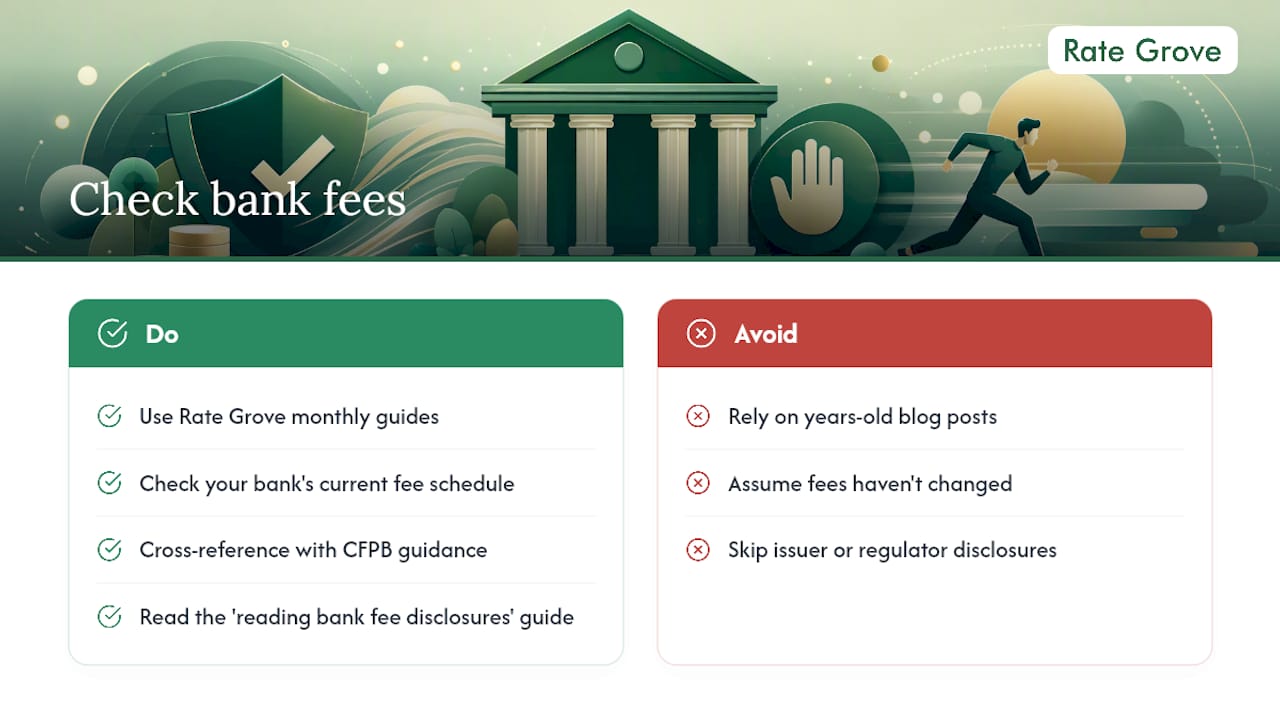
Fee schedules change quietly and often, which is exactly why Rate Grove runs monthly-updated, fact-checked guides that track what banks actually charge for stop payments and other common account fees. The goal is simple: pull real numbers from issuer and regulator disclosures so you’re not relying on outdated blog posts from three years ago.
Before you assume a fee applies to you, check your bank’s current fee schedule directly and cross-reference it with the CFPB’s consumer guidance. If you want a deeper look at how these charges add up over time, Rate Grove’s guide on reading bank fee disclosures walks through where banks tend to bury the fine print.
What matters most when you’re facing a stop payment
Contact your bank first, argue about the fee second. That order matters because a five minute delay while you debate whether $30 is fair could be the difference between stopping a check and watching it clear anyway.
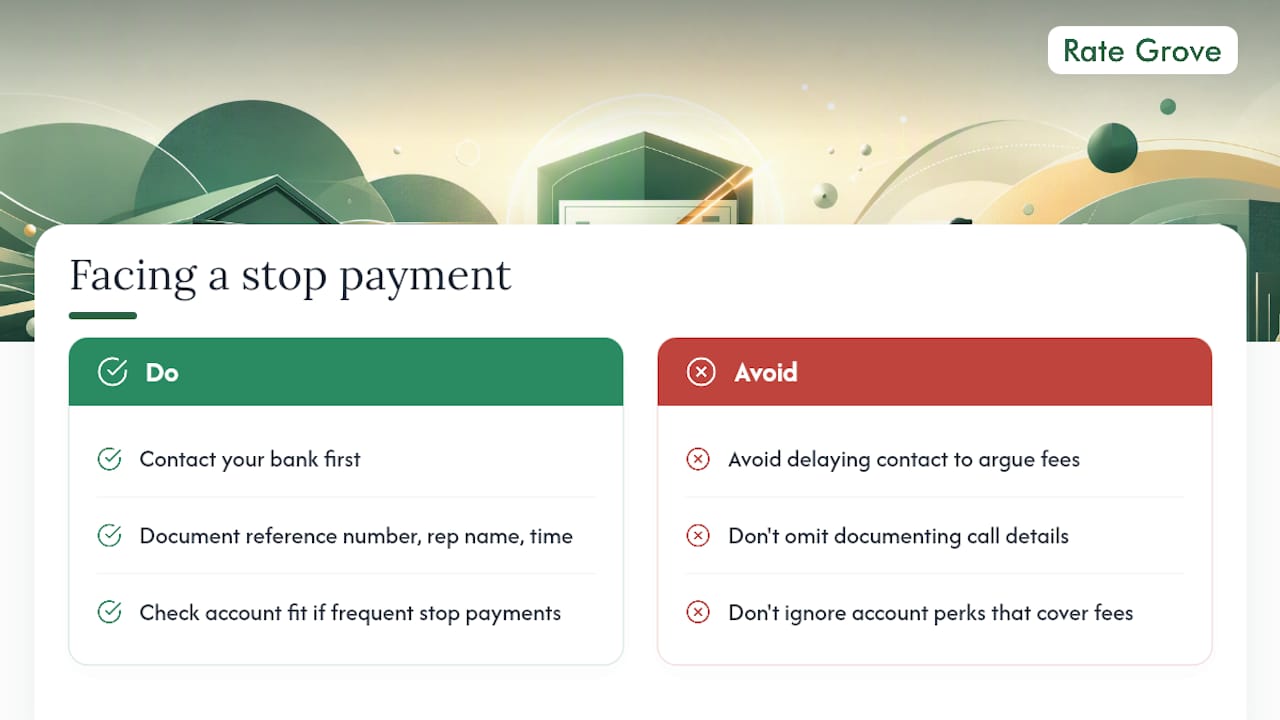
Document everything: the reference number, the representative’s name, and the exact time you called. That record protects you if the stop payment fails or the fee gets applied incorrectly.
If you find yourself placing stop payments more than once a year, it’s worth checking whether your account is even the right fit anymore. Some checking accounts include free stop payments as a standard perk, and that alone can offset a higher monthly fee elsewhere.
— Mat C.
Compare accounts before the next fee catches you off guard
There are services that offer alternatives to guessing whether your bank’s fees are competitive. Instead of digging through a dozen disclosure pages after you’ve already been charged, Some comparison tools put checking account fees, perks, and waiver policies side by side using verified data from issuer and regulator sites.
Some financial guides are checked and updated regularly, which matters given how often banks quietly revise their fee schedules. If a $30 or $35 stop payment fee just caught you by surprise, that’s a good sign it’s time to see what else is out there. Browse current bank account comparisons on Rate Grove to find accounts that either waive stop payment charges outright or bundle them into a no-fee relationship tier, so the next unexpected check doesn’t cost you twice.
This article is general information, not a substitute for advice from a qualified financial advisor. Consult a qualified financial professional about your own circumstances before acting on anything here.