

Your checking account is leaking money every month, and most of it is preventable. The biggest common checking account fee drains are monthly maintenance fees, overdraft and NSF charges, out-of-network ATM fees, foreign transaction fees, inactivity fees, and a handful of one-time charges like wire transfers and stop payments. Here is the short list with the fastest fix for each:
- Monthly maintenance fee ($13.51/month on average): Set up qualifying direct deposit or maintain the required minimum balance to get it waived automatically.
- Overdraft/NSF fee ($26.77 per event on average): Call your bank today and opt out of overdraft coverage for debit and ATM transactions. Declined transactions cost nothing.
- Out-of-network ATM fee ($4.64 per visit on average): Use your bank’s ATM locator app to stay in-network, or switch to an account with ATM-fee reimbursement.
- Foreign transaction fee (1%–3% of purchase): Use a checking account with no foreign transaction fees, or pay with a card that waives them abroad.
- Inactivity/minimum-balance fee ($5–$20/month): Make at least one transaction per quarter on dormant accounts, or close them properly before the dormancy threshold kicks in.
- Returned-deposit fee ($10–$20 per item): Verify checks before depositing; ask payers to use electronic transfers instead.
- Stop-payment fee ($15–$35 per request): Use electronic payments where possible so stop payments are rarely needed.
- Wire transfer fee ($15–$50 outgoing; typical domestic wires cost $15–$30, international wires can run $35–$50): Substitute Zelle, ACH transfers, or peer-to-peer apps for most domestic transfers.
- Paper statement fee ($1–$3/month; most commonly $2 per month): Switch to e-statements in your account settings right now.
- Account research fee ($25–$50/hour; most commonly $25 per hour): Keep your own records and download statements regularly so you never need the bank to reconstruct history.
- Early-closure fee ($15–$25; most commonly $25): Wait out the minimum holding period (typically 90–180 days) before closing a new account.
The CFPB and FDIC both provide free resources to help you understand your rights around these charges. Use Rate Grove’s side-by-side comparison tool to see which accounts carry the lowest fees before you open or switch.
Table of Contents
- What are the most common checking account fee drains?
- Quick-reference table: every checking fee at a glance
- How do banks set and disclose checking-account fees?
- Practical tactics you can use this week to stop fee drains
- What is the CFPB doing about checking-account fees?
- How do you compare and switch to a fee-free checking account?
- Key Takeaways
- Why fee elimination beats chasing APY on checking accounts
- Rate Grove makes it easy to find a low-fee checking account
- Authoritative sources and recommended reading
What are the most common checking account fee drains?
Understanding each fee in detail helps you spot it on a statement, estimate its annual cost, and apply the right fix.
Monthly maintenance fee
This is the most persistent drain on a checking account. Banks charge it simply for keeping the account open, regardless of how you use it. Among checking accounts that charge a monthly fee, the average fee represents a significant annual cost. The MoneyRates Checking Account Fee Survey indicates some customers pay substantial annual fees just to maintain access.

On your statement, look for descriptors like “MONTHLY SERVICE FEE,” “ACCOUNT MAINTENANCE,” or “SERVICE CHARGE.” The waiver conditions are usually printed in the account agreement: a minimum daily balance (often $1,500–$1,500), a qualifying direct deposit, or a minimum number of monthly transactions. Call your bank and ask: “I noticed a monthly service fee on my account. What do I need to do to have it waived going forward, and can you reverse last month’s charge as a one-time courtesy?”
Pro Tip: Many banks offer student, senior, or basic checking accounts with lower or no monthly fees. Ask specifically about these tiers if you qualify.
Overdraft and NSF fees
Overdraft fees hit when a transaction exceeds your available balance and the bank covers it anyway. NSF (non-sufficient funds) fees apply when the bank declines the transaction instead. Both typically run within a range of per event fees. According to industry reports, the average overdraft fee is around the middle of that range.
The real danger is stacking. Banks sometimes post transactions from high to low rather than in chronological order, which can convert one low-balance day into multiple overdraft charges. Five transactions while overdrawn at a $32.75 average fee equals $163.75 in a single day. On your statement, these appear as “OVERDRAFT FEE,” “OD FEE,” or “NSF FEE,” often listed separately for each transaction that triggered one.

The fastest fix is opting out of overdraft coverage for debit card and ATM transactions. Federal rules require your bank to get your explicit consent before enrolling you in standard overdraft services for these transaction types. Opting out means the transaction is simply declined at the register, with no fee. For checks and ACH payments, link a savings account as overdraft protection; the transfer fee (usually $10–$12) is far cheaper than a $35 overdraft charge.
Out-of-network ATM fees
Using an ATM outside your bank’s network triggers two separate charges: one from the ATM owner and one from your own bank. Combined, these fees average a few dollars per transaction. Frequent use of out-of-network ATMs can add up to a noticeable monthly and yearly cost.
Statement descriptors include “ATM SURCHARGE,” “NON-NETWORK ATM FEE,” or “FOREIGN ATM FEE.” The fix is straightforward: use your bank’s mobile app to find in-network ATMs near you before you need cash. Alternatively, get cash back at grocery stores or pharmacies, which is free. If you travel frequently, consider an account at an online bank that reimburses out-of-network ATM fees monthly.
Foreign transaction fees
These fees, typically 1%–3% of each purchase, apply when you use your debit card outside the U.S. or at a foreign-currency merchant online. On a $500 hotel charge abroad, a 3% fee adds $15 instantly. Look for “FOREIGN TRANSACTION FEE” or “INTL TRANSACTION FEE” on your statement.
Accounts at Ally Bank, Capital One 360, and Discover Bank charge no foreign transaction fees on their checking products. If you travel internationally more than once a year, this is worth factoring into your account choice.
Minimum-balance and inactivity fees
Some accounts charge a fee when your balance drops below a set threshold, separate from the monthly maintenance waiver requirement. Others charge an inactivity fee after a period of no transactions. Dormancy thresholds vary widely, commonly ranging from 3–12 months, and once an inactivity fee starts, it can recur monthly and slowly erode a small balance until the account reaches zero.
If you have an old account you rarely use, either make a small transaction every few months to reset the dormancy clock or close the account properly and get written confirmation. Never just stop using an account and assume it will stay at zero.
Paper statement fees
Banks increasingly charge $1–$3 per month for mailed paper statements. It is a small fee, but it is entirely avoidable. Log into your online banking portal, find the “Statement Delivery” or “Paperless” setting, and switch to e-statements. This takes about two minutes and saves up to $36 per year.
Stop-payment fees
Requesting a stop payment on a check or scheduled ACH transfer typically costs $15–$35 per request. On your statement, it appears as “STOP PAYMENT FEE.” The best avoidance strategy is using electronic payments from the start, since digital transfers can often be canceled or reversed more easily and at lower cost than a formal stop-payment order.
Wire transfer fees
Outgoing domestic wire transfers commonly cost $15–$30, while international wires can run $35–$50. Incoming wires sometimes carry a $10–$15 fee as well. For most everyday transfers, Zelle, ACH bank transfers, or apps like Venmo accomplish the same goal at no cost. Reserve wire transfers for situations where speed and finality are legally required, such as real estate closings.
Account research fees
If you ask the bank to reconstruct transaction history beyond what is available online, many charge $25–$50 per hour of research time. The simple prevention: download and save your statements monthly. Most banks provide 12–24 months of history online, but older records may require a research request.
Returned-deposit fees
When you deposit a check that bounces, your bank charges you a returned-deposit fee of $10–$20, even though you were not the one who wrote the bad check. This appears as “RETURNED ITEM FEE” or “DEPOSITED ITEM RETURNED.” Ask payers to use electronic transfers when possible, and be cautious about depositing checks from unfamiliar sources.
Early-closure fees
Opening an account and closing it within 90–180 days often triggers a fee of $15–$25. Banks use this to recoup the cost of account setup. If you open an account and decide it is not right for you, check the account agreement for the minimum holding period before closing.
How multiple fees stack up: A customer paying a $13.51 monthly maintenance fee, hitting two out-of-network ATMs per month at $4.64 each, and triggering one overdraft at $26.77 is spending about $53.56 in a single month, or about $642.72 per year, on entirely avoidable charges. Fees like these are why checking account fees on small balances can quietly erase savings faster than any interest rate can rebuild them.
Quick-reference table: every checking fee at a glance
| Fee name | Typical cost range | Common statement description | Fastest fix |
|---|---|---|---|
| Monthly maintenance | $13.51/month (average) | MONTHLY SERVICE FEE, ACCOUNT MAINTENANCE | Set up direct deposit or meet minimum balance |
| Overdraft | $26.77/event (average) | OVERDRAFT FEE, OD FEE | Opt out of overdraft coverage for debit/ATM |
| NSF (non-sufficient funds) | $26.77/event (average) | NSF FEE, RETURNED ITEM | Opt out; link savings as overdraft protection |
| Out-of-network ATM | $4.64/visit (average) | ATM SURCHARGE, NON-NETWORK ATM FEE | Use in-network ATMs; get cash back at stores |
| Foreign transaction | 1%–3% of purchase | FOREIGN TRANSACTION FEE, INTL FEE | Use an account with no foreign transaction fees |
| Minimum-balance fee | $5–$15/month | BELOW MINIMUM BALANCE FEE | Maintain required balance or switch account type |
| Inactivity/dormancy | $5–$20/month | INACTIVITY FEE, DORMANCY FEE | Transact periodically or close account properly |
| Paper statement | $2/month (most common) | PAPER STATEMENT FEE | Switch to e-statements in account settings |
| Stop payment | $15–$35/request | STOP PAYMENT FEE | Use electronic payments to avoid the need |
| Wire transfer (outgoing) | $15–$50/transfer (domestic typically $15–$30; international $35–$50) | WIRE FEE, OUTGOING WIRE | Use Zelle or ACH for domestic transfers |
| Account research | $25/hour (most common) | RESEARCH FEE, STATEMENT COPY FEE | Download and save statements monthly |
| Returned-deposit | $10–$20/item | RETURNED ITEM FEE, DEPOSITED ITEM RETURNED | Request electronic payments from payers |
| Early-closure | $25 (most common) | EARLY ACCOUNT CLOSURE FEE | Wait out the minimum holding period (90–180 days) |
Reading statement descriptions: Most fee entries include a transaction code (2–4 letters), a short descriptor, and a reference number. The descriptor tells you the fee type; the reference number is what you give the bank when disputing a charge.
How do banks set and disclose checking-account fees?
Banks are generally free to charge fees as long as they disclose them properly. Federal guidance confirms that deposit account fees are lawful when disclosed in the account agreement and fee schedule. That disclosure obligation is your leverage as a consumer.
Here is where to find the fee language:
- Account agreement: The document you receive (or click through) at account opening. It contains the full list of fees, waiver conditions, and the bank’s right to change terms with notice.
- Schedule of Fees: A separate, shorter document often available on the bank’s website under “Legal Disclosures” or “Account Documents.” This is the fastest place to check a specific fee amount.
- Periodic statements: Your monthly statement must itemize every fee charged that cycle. Compare the fee line items against the Schedule of Fees to verify accuracy.
- In-branch printed disclosures: Required to be available on request at any branch.
For a deeper walkthrough of how to read these documents, Rate Grove’s guide on reading bank account fee disclosures covers the exact language to look for and common traps.
One thing to watch: bundled optional services added at account opening, such as identity protection plans or paper check packages, can appear as recurring monthly line items that are easy to miss. Audit your account opening disclosures and cross-reference every recurring charge on your statement against a service you actually use.
Dispute checklist (in order):
- Gather the date, exact dollar amount, and statement description of the fee you are disputing.
- Call the bank’s customer service line and state: “I was charged [fee name] on [date] for $[amount]. I’d like to request a reversal as a one-time courtesy.”
- If the representative declines, ask to speak with a supervisor or account specialist.
- If the bank refuses a legitimate reversal, file a written complaint with the CFPB at consumerfinance.gov or with the FDIC at fdic.gov. Both agencies track complaint patterns and can prompt bank responses.
- Document every call: note the date, the representative’s name, and the outcome.
Practical tactics you can use this week to stop fee drains
The highest-impact actions take less than 30 minutes total. Start here.
In the next 7 days:
- Pull your last two monthly statements and highlight every fee line item. Total them up. That number is your baseline.
- Log into online banking and confirm your overdraft preference. If you are enrolled in overdraft coverage for debit and ATM transactions, opt out now.
- Enroll in direct deposit if your employer supports it. This single step waives the monthly maintenance fee at most major banks, including Chase and Bank of America.
- Set a low-balance alert at $200–$300 above your typical lowest point. You will get a text or email before a transaction can trigger an overdraft.
- Switch to e-statements if you have not already.
Monthly habits that keep fees low:
- Review your statement within the first week of each new month. Look for any new recurring line items.
- Reconcile your account every 7–10 days using your bank’s mobile app. Catching a discrepancy early costs nothing; catching it after 60 days may mean the dispute window has closed.
- Keep a mental or saved map of in-network ATMs near your home, workplace, and regular errands.
- If you have multiple checking accounts with small balances, consolidate. Each account with a balance below the maintenance waiver threshold is a monthly fee you are paying for no reason.
Negotiation script: When calling for a waiver, keep it short and specific. “I’ve been a customer for [X] years and I noticed a [fee name] charge on my account dated [date]. I’d like to request a one-time reversal.” Asking directly and politely works more often than most people expect. Customers who ask for fee reversals frequently succeed, yet many never make the call.
Pro Tip: If your bank posts debits from high to low rather than chronologically, schedule your largest recurring payments (rent, utilities) for the day after your paycheck posts, not the day of. This reduces the chance of a brief gap triggering multiple overdraft fees on smaller transactions.
If you can only do 1–3 things right now:
- Opt out of overdraft coverage for debit and ATM transactions. This eliminates the single most expensive per-event fee.
- Set up direct deposit to waive the monthly maintenance fee.
- Switch to in-network ATMs or an account with ATM-fee reimbursement.
What is the CFPB doing about checking-account fees?
The CFPB’s junk fees initiative specifically targets surprise and exploitative fees, including certain overdraft practices. The agency has proposed rules and taken enforcement actions against banks that charged fees consumers could not reasonably anticipate or avoid. Surprise overdraft fees, where a consumer is charged even though their account showed a positive balance at the time of the transaction, are among the practices regulators have directly challenged.
The CFPB’s position: Fees that are not clearly disclosed, that are triggered by opaque bank processing decisions, or that are layered on top of each other in ways consumers cannot predict are the primary targets of the agency’s junk fees enforcement work. Consumers who have been charged these fees may be entitled to refunds through enforcement actions, and can file complaints directly with the CFPB to add to the agency’s complaint database.
Enforcement actions have required some large banks to refund customers and change their overdraft practices. That regulatory pressure gives you real leverage when you call to dispute a fee. A bank that has already faced CFPB scrutiny over overdraft charges is more likely to reverse a fee than one that has not. Mentioning that you are aware of your right to file a CFPB complaint, calmly and factually, can move a conversation forward.
For consumers, the practical takeaway is this: regulatory activity has expanded the range of fee-free and low-fee options available. Credit unions, online banks, and some community banks have responded to this environment by eliminating monthly maintenance and overdraft fees entirely. Accounts at institutions like Ally Bank, Capital One 360, and Discover Bank charge no monthly maintenance fees and no overdraft fees on their standard checking products. Credit unions, as a category, consistently offer lower fee structures than large commercial banks.
How do you compare and switch to a fee-free checking account?
Switching accounts is less complicated than most people assume, and the savings justify the hour it takes.
What to evaluate before you switch:
- Monthly maintenance fee and waiver conditions
- Overdraft and NSF policy (does the bank charge at all, or just decline?)
- ATM network size and out-of-network reimbursement policy
- Foreign transaction fees (relevant if you travel or shop internationally)
- Minimum balance requirements and inactivity rules
- Early-closure fee and minimum holding period
- Digital features: mobile deposit, Zelle, bill pay, low-balance alerts
- Branch and cash deposit access (important if you handle cash regularly)
Use Rate Grove’s bank account comparison checklist to run through these criteria side by side before committing.
Step-by-step switching process:
- Compare accounts using a verified fee comparison tool. Filter for no monthly maintenance fee, no overdraft fee, and ATM-fee reimbursement if those are your priorities.
- Open the new account before closing the old one. Fund it with enough to meet any minimum opening deposit.
- Move your direct deposit. Contact your employer’s payroll department or update your direct deposit form. Allow one to two pay cycles for the change to take effect.
- Update autopay and recurring bills. List every automatic payment linked to the old account (utilities, subscriptions, loan payments) and update each one to the new account number.
- Wait for the transition period to clear. Keep the old account open and funded for 30–60 days to catch any payments that still route to it.
- Close the old account properly. Request written confirmation of the closure. Verify the account shows a $0 balance and that no pending transactions remain. Keep the confirmation letter.
- Monitor for residual fees. Check your new account statement for the first two months to confirm no fees from the old account or transition period have appeared.
Timing note: Avoid closing an old account in the same week you open a new one. A gap in direct deposit coverage can trigger a returned-deposit fee if a payment posts before the new routing information is active.
If you are comparing fee-free options, accounts at Ally Bank, Capital One 360, and Discover Bank are frequently cited for their no-fee structures. Credit unions as a category offer competitive fee terms and are worth including in any comparison. The why compare checking account rates guide at Rate Grove explains why fee differences consistently outweigh APY differences for most checking account users.
Key Takeaways
Eliminating recurring checking-account fees, starting with monthly maintenance and overdraft charges, saves most households more than any APY gain on a typical checking balance.
| Point | Details |
|---|---|
| Monthly maintenance is the top drain | The average monthly maintenance fee is $13.51; direct deposit enrollment typically waives it entirely. |
| Overdraft fees stack fast | At an average of $26.77 per event, five overdraft transactions in one day can cost $133.85. |
| Opt-out is the fastest overdraft fix | Federal rules let you opt out of overdraft coverage for debit and ATM transactions with a single phone call. |
| Regulatory leverage is real | CFPB enforcement has required banks to refund surprise fees; mentioning your right to file a complaint strengthens waiver requests. |
| Rate Grove simplifies the switch | Use Rate Grove’s side-by-side fee comparison to filter for no-maintenance, no-overdraft accounts before opening or switching. |
Why fee elimination beats chasing APY on checking accounts
The conventional advice to “find a high-yield checking account” misses the point for most people. A typical checking balance of a few hundred to a few thousand dollars earns a modest amount of interest even at a competitive APY. A single monthly maintenance fee of $13.51 wipes out weeks of that interest in one line item. Two overdraft charges in a month cost more than most checking accounts earn in a year.
The math is straightforward, but the behavior is harder to change because fees feel passive and interest feels like a reward. Fees are deducted automatically and quietly; interest, when it appears, feels like a bonus. That asymmetry is exactly why banks structure accounts the way they do.
The smarter move is to treat fee elimination as the first filter when choosing or keeping a checking account, and APY as a secondary consideration. Once you have a genuinely fee-free account, any interest it earns is pure upside. The savings rate comparison factors guide at Rate Grove makes this case with specific numbers for different balance levels.
One concrete example: a customer who calls their bank and successfully reverses a $13.51 monthly maintenance fee has effectively “earned” $13.51 in about five minutes. At a 0.5% APY on a $1,000 balance, earning that same $13.51 in interest would take over two years. The waiver call wins by a wide margin.
Rate Grove makes it easy to find a low-fee checking account
Sorting through fee schedules across dozens of banks is tedious, and most bank websites bury the details you actually need. Rate Grove cuts through that by pulling verified fee data directly from issuer and regulator sources and presenting it in a single, side-by-side view.
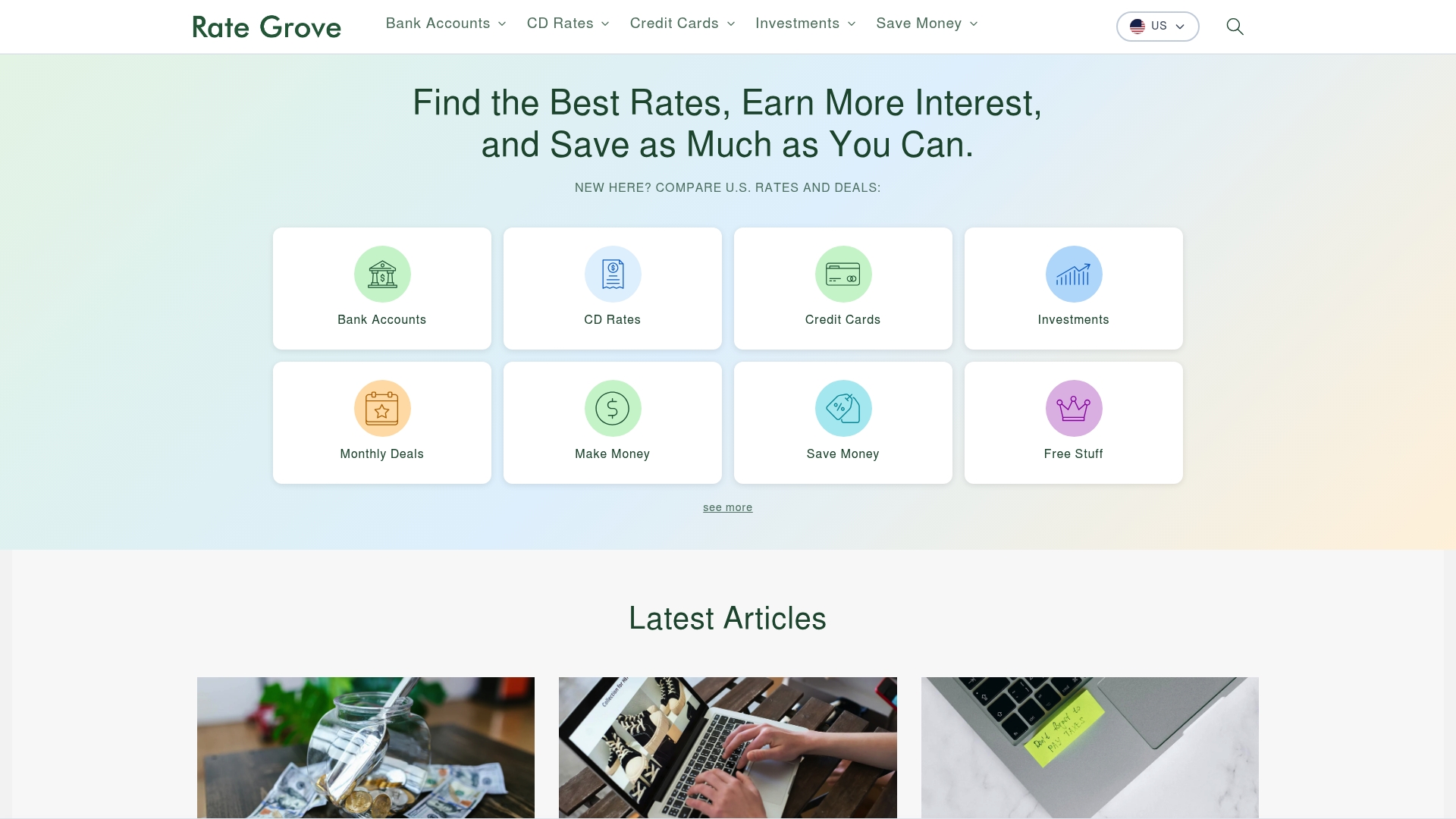
With Rate Grove, you can filter checking accounts by monthly maintenance fee, overdraft policy, ATM network size, and foreign transaction fees all at once. You can see exactly what waiver conditions apply, whether ATM-fee reimbursement is included, and how accounts from Ally Bank, Capital One 360, Discover Bank, and credit unions compare on the fees that matter most to you. Every comparison is built from verified data and updated monthly, so you are not working from outdated fee schedules.
Start your fee comparison at Rate Grove and find a checking account that stops the drain before next month’s statement arrives.
Authoritative sources and recommended reading
These are the primary sources to consult when verifying fees, disputing charges, or understanding your rights:
- CFPB Junk Fees Initiative: The Consumer Financial Protection Bureau’s active enforcement and rulemaking page on surprise and exploitative fees, including overdraft practices. Use this to understand your rights and to file a complaint if a bank refuses a legitimate reversal.
- CFPB Avoiding Checking Account Fees Tool: A practical, step-by-step worksheet from the CFPB covering strategies to reduce checking fees, including overdraft opt-out, balance alerts, and minimum-balance management.
- FDIC Inactive Accounts Guidance: Official FDIC explanation of dormancy rules, inactivity fee triggers, and what happens to accounts that go untouched. Consult this if you have old accounts you have not used recently.
- HelpWithMyBank.gov: A federal resource explaining the legal basis for bank fees and where to escalate complaints for nationally chartered banks. Use this to verify whether a fee is legally permissible and how to dispute it.
- Pew Charitable Trusts: Overdraft Costs Report: Research on how transaction posting order affects overdraft frequency and consumer cost. Useful background when disputing multiple same-day overdraft charges.
- Rate Grove Checking Account Comparison: Side-by-side fee comparisons for U.S. checking accounts, updated monthly from verified issuer and regulator data. Start here to find a lower-fee account.