

What are the best student credit cards by annual fee in 2026?
The short answer: most of the best student credit cards charge $0 in annual fees, and that’s exactly where you should start your search. For students working with tight budgets and building credit from scratch, a no-annual-fee card is almost always the right call. Here’s a quick look at the top options and what they cost to carry each year.
- Capital One Savor Student Cash Rewards Credit Card — $0 annual fee; 3% cash back on dining, entertainment, streaming, and grocery stores, plus 8% on Capital One Entertainment purchases
- Discover it® Student Cash Back — $0 annual fee; 5% cash back on rotating quarterly categories (up to $1,500, activation required), plus Discover matches all rewards earned in year one
- Chase Freedom Rise® — $0 annual fee; 1.5% flat cash back on all purchases; no deposit required, making it one of the most accessible cards for students with no credit history
- Bank of America® Unlimited Cash Rewards credit card for Students — $0 annual fee; 1.5% cash back on all purchases (2% for the first year from account opening)
- Bank of America® Travel Rewards credit card for Students — $0 annual fee; 1.5 points per dollar on everyday purchases, 3 points per dollar on travel booked through Bank of America Travel Center
- Discover it® Student Chrome — $0 annual fee; 2% cash back at gas stations and restaurants (up to $1,000 in combined purchases per quarter, then 1%)
- Capital One Quicksilver Student Cash Rewards Credit Card — $0 annual fee; 1.5% flat cash back on all purchases, plus 5% on hotels and rental cars booked through Capital One Travel
- Firstcard Secured Credit Builder Card with Cashback for Students — annual fee varies by plan; reports to all three major credit bureaus; designed for students with no credit history, including international students
- Self Visa Credit Card (secured) — small monthly fee structure; reports to all three bureaus; credit limit tied to savings progress
- Discover it Secured Credit Card — $0 annual fee; 2% cash back at gas stations and restaurants (up to $1,000 per quarter), plus first-year rewards match
- Grow Credit Mastercard — $0 annual fee on the base plan; builds credit through subscription payment reporting
The clear pattern: the strongest student cards carry no annual fee at all. No-annual-fee student cards give you the flexibility to keep the account open long-term without any financial pressure, which is exactly what helps your credit score grow.
Detailed profiles of top student credit cards and their annual fees
Every card below has been reviewed for its annual fee structure, rewards program, APR range, credit-building features, and key perks. The goal is to give you enough detail to make a confident choice without having to dig through the fine print yourself.

Capital One Savor Student Cash Rewards Credit Card
The Savor Student card is the strongest all-around pick for students who spend regularly on food, entertainment, and streaming. The annual fee is $0, and the rewards structure is genuinely competitive: 8% cash back on Capital One Entertainment purchases, 5% on hotels and rental cars through Capital One Travel, 3% on dining, entertainment, popular streaming services, and grocery stores (excluding superstores like Walmart and Target), and 1% on everything else. The APR runs in the range of 19.49%–29.49% variable, which is typical for student cards. Capital One reports to all three major credit bureaus, so every on-time payment contributes to your credit history.
Discover it® Student Cash Back
Discover’s flagship student card pairs a $0 annual fee with one of the most rewarding structures in this category. You earn 5% cash back on rotating quarterly categories (up to $1,500 in combined purchases per quarter, activation required), then 1% after that, plus 1% on all other purchases. The real standout is Discover’s first-year cash back match: at the end of your first 12 months, Discover automatically doubles every dollar you’ve earned. There’s also a 0% intro APR on purchases for the first six months, then a variable rate applies. No foreign transaction fees and no late fee on your first missed payment round out a card that’s hard to beat at $0.

Chase Freedom Rise®
Chase Freedom Rise is built for students who have little to no credit history and want a straightforward path to approval. There’s no annual fee and no security deposit required, which separates it from many entry-level options. You earn 1.5% cash back on all purchases, and Chase offers a path to a credit limit increase after demonstrating responsible use. The APR is variable and on the higher end for this category, so carrying a balance is something to avoid. Chase reports to all three bureaus, and the card comes with Chase’s purchase protection and fraud monitoring.
Bank of America® Unlimited Cash Rewards credit card for Students
This card keeps things simple: $0 annual fee and a flat cash back rate that requires no category tracking. For the first year from account opening, you earn 2% cash back on all purchases; after that, the rate drops to 1.5%. Bank of America also offers a 0% intro APR period on purchases, which can be useful for managing a larger one-time expense. The card reports to all three major credit bureaus and comes with Bank of America’s digital banking tools, including mobile check deposit and spending alerts.
Bank of America® Travel Rewards credit card for Students
If you travel even occasionally, this card earns more than a flat-rate cash back card on the right purchases. The annual fee is $0, and you earn 3 points per dollar on travel booked through the Bank of America Travel Center, plus 1.5 points per dollar on all other purchases. Points never expire and can be redeemed as a statement credit toward travel purchases. There’s no foreign transaction fee, which matters if you study abroad or travel internationally. The card also comes with a 0% intro APR on purchases for a set period, then a variable rate.
Discover it® Student Chrome
The Chrome card is the right fit for students who commute or spend consistently on gas and dining. The annual fee is $0, and you earn 2% cash back at gas stations and restaurants on up to $1,000 in combined purchases each quarter, then 1%. Like the Student Cash Back card, Discover matches all rewards earned in the first year. The APR structure mirrors Discover’s other student products, with a 0% intro period on purchases followed by a variable rate. No foreign transaction fees and no fee on your first late payment apply here too.
Capital One Quicksilver Student Cash Rewards Credit Card
The Quicksilver Student card is the flat-rate alternative to the Savor Student card. The annual fee is $0, and you earn 1.5% cash back on every purchase, plus 5% on hotels and rental cars booked through Capital One Travel. The rewards structure is simpler than the Savor card’s tiered system, which suits students who don’t want to think about category optimization. APR is variable and in a similar range to the Savor Student card. Capital One reports to all three bureaus and offers CreditWise, a free credit monitoring tool available to all cardholders.
Firstcard Secured Credit Builder Card with Cashback for Students
Firstcard takes a different approach to the secured card category. Rather than requiring a large upfront deposit, it’s designed specifically for students with no credit history, including international students who often struggle to qualify for traditional cards. The card reports to all three major credit bureaus, which is the minimum standard you should require from any secured card you consider. The annual fee structure depends on the plan you choose, with a free tier and a premium tier (Firstcard Premium) that unlocks higher cashback rates on qualifying transactions. Confirming the exact fee for your chosen plan before applying is worth the extra minute.
Self Visa Credit Card (secured)
The Self Visa works differently from most secured cards. You start by opening a Credit Builder Account with Self, make monthly payments into it, and then unlock the Self Visa using the savings you’ve built up as your security deposit. The card reports to all three major credit bureaus. There are monthly fees involved, so the total cost of using this card is higher than a $0-annual-fee option. It suits students who need a structured savings-plus-credit-building approach and don’t qualify for unsecured cards.
Discover it Secured Credit Card
The Discover it Secured card is one of the few secured cards that charges no annual fee while still offering cash back rewards. You earn 2% at gas stations and restaurants (up to $1,000 in combined purchases per quarter, then 1%), plus 1% on all other purchases. Discover matches all rewards earned in the first year. The card requires a security deposit (minimum $200), which becomes your credit limit. Discover reviews accounts periodically and may return your deposit and transition you to an unsecured card once you’ve demonstrated responsible use. It reports to all three bureaus.
Grow Credit Mastercard
Grow Credit takes a niche but genuinely useful approach to credit building. Instead of functioning as a traditional credit card, it lets you pay for eligible subscription services (like Spotify, Netflix, or Hulu) through the card, then reports those payments to the credit bureaus. The base plan carries no annual fee. It’s not a card for general spending, but for students who already pay for subscriptions and want those payments to count toward their credit history, it fills a specific gap.
How do these cards compare side by side?
Every card in one place, with the dimensions that matter most for students comparing annual fees and features.
| Card | Annual Fee | Cash Back / Rewards | APR (Variable) | Credit Building Features | Best For |
|---|---|---|---|---|---|
| Capital One Savor Student Cash Rewards Credit Card | $0 | 8% Capital One Entertainment; 3% dining, entertainment, streaming, groceries; 1% other | 19.49%–29.49% | Reports to all 3 bureaus; CreditWise monitoring | Overall rewards |
| Discover it® Student Cash Back | $0 | 5% rotating categories (up to $1,500/quarter, activation required); 1% other; first-year match | 0% intro, then variable | Reports to all 3 bureaus; free FICO score | Rotating cash back |
| Chase Freedom Rise® | $0 | 1.5% on all purchases | Variable | Reports to all 3 bureaus; path to credit limit increase | No deposit, easy approval |
| Bank of America® Unlimited Cash Rewards credit card for Students | $0 | 2% all purchases (first year); 1.5% after | 0% intro APR, then variable | Reports to all 3 bureaus; digital banking tools | Intro APR + flat cash back |
| Bank of America® Travel Rewards credit card for Students | $0 | 3 pts/$1 on travel (BofA Travel Center); 1.5 pts/$1 other | 0% intro APR, then variable | Reports to all 3 bureaus | Student travelers |
| Discover it® Student Chrome | $0 | 2% gas stations and restaurants (up to $1,000/quarter); 1% other; first-year match | 0% intro, then variable | Reports to all 3 bureaus; free FICO score | Commuters / gas and dining |
| Capital One Quicksilver Student Cash Rewards Credit Card | $0 | 1.5% on all purchases; 5% hotels and rentals via Capital One Travel | 19.49%–29.49% | Reports to all 3 bureaus; CreditWise monitoring | Flat-rate simplicity |
| Firstcard Secured Credit Builder Card with Cashback for Students | Varies by plan | Cashback on qualifying transactions (rate varies by plan) | Variable | Reports to all 3 bureaus; designed for no credit history | International students, no credit history |
| Self Visa Credit Card (secured) | Monthly fees apply | — | Variable | Reports to all 3 bureaus; tied to Credit Builder Account savings | Structured credit building |
| Discover it Secured Credit Card | $0 | 2% gas stations and restaurants (up to $1,000/quarter); 1% other; first-year match | Variable | Reports to all 3 bureaus; periodic account reviews for upgrade | Secured card with no annual fee |
| Grow Credit Mastercard | $0 (base plan) | Subscription payment reporting | — | Reports to bureaus via subscription payments | Building credit through subscriptions |
A few things stand out when you look at this side by side. First, the $0 annual fee is the norm across this entire category, not the exception. Second, the Discover cards offer first-year rewards matching that no other issuer in this group replicates. Third, secured card options split into two camps: those that charge fees (Self Visa, some Firstcard tiers) and those that don’t (Discover it Secured). For students who need a secured card, the Discover it Secured is the strongest fee-free option in the group.
How to choose the best student credit card considering annual fees
The single most important rule: start with $0 annual fee cards. Financial experts consistently point to the no-annual-fee card as the right default for students, and the reason is straightforward. A card you can afford to keep open for years builds a longer credit history, and credit history length is one of the factors that shapes your credit score over time. A fee you can’t justify paying creates pressure to close the account, which can actually hurt your score.
That said, choosing the right $0 card still takes some thought. Here’s how to work through it:
Match the card to your actual spending habits. If you spend most of your money on food and entertainment, the Capital One Savor Student card’s 3% rate in those categories beats a flat 1.5% card by a meaningful margin over a year. If your spending is unpredictable or spread across many categories, a flat-rate card like the Quicksilver Student or Chase Freedom Rise is simpler and still competitive.
Think about credit building, not just rewards. Every card on this list reports to all three major credit bureaus (Equifax, Experian, and TransUnion), which is the baseline you need. But some cards offer extras: Discover provides a free FICO score on monthly statements, Capital One offers CreditWise monitoring, and Chase offers a path to a credit limit increase after responsible use. These features cost you nothing and give you visibility into your progress.
Look beyond the annual fee at other costs. The annual fee is just one number. The APR matters if you ever carry a balance, and student card APRs tend to run high (often above 19% variable). Late fees, foreign transaction fees, and balance transfer fees can add up quickly too. A card with a 0% intro APR on purchases, like the Bank of America Unlimited Cash Rewards for Students, can be genuinely useful if you’re managing a one-time larger expense.
For secured cards, verify bureau reporting and fee types. Secured cards sometimes carry annual fees, and some charge setup fees on top of that. Before applying for any secured card, confirm that it reports to all three bureaus (not just one or two) and that you understand whether the fee is a one-time charge or recurring. The Discover it Secured card is the cleanest option here: $0 annual fee, cash back rewards, and Discover’s track record of reviewing accounts for an upgrade to unsecured status.
Don’t close a no-annual-fee card just because you got a better one. Keeping your oldest card open, even if you rarely use it, preserves your credit history length. Closing your oldest card can shorten your average account age and potentially lower your score. If the card has no annual fee, there’s no financial reason to close it.
Pro Tip: If you’re comparing two cards and one offers a first-year fee waiver, treat that first year as a trial period. Use the card actively, track whether the rewards you earn would cover the fee in year two, and make the keep-or-cancel decision before the anniversary date. Many students discover the math works in their favor and keep the card. Others switch to a no-fee alternative with no penalty.
What do annual fees actually cost, and when do they make sense?
Annual fees on credit cards are charged once a year, typically on the anniversary of the month you opened the account, not on a calendar-year basis. Some issuers charge the fee when you first open the account; others wait until your first monthly statement. The timing matters because it affects when you need to decide whether to keep or cancel a card.
For standard rewards cards, annual fees typically range from about $35 to $100. Premium travel cards can run $250 and above, with some flagship cards charging $500 or more. Student cards almost universally sit at $0, which is one of the reasons they’re the right starting point for anyone new to credit.
The Consumer Financial Protection Bureau reported that the average credit card annual fee is $127, though that figure reflects the full market including premium travel and rewards cards, not the student segment specifically. For students, the relevant benchmark is $0, because that’s what the best cards in this category actually charge.
When does paying an annual fee make sense? The math is simple: add up the dollar value of every reward and perk you’d actually use in a year. If that total exceeds the fee, the card pays for itself. If it doesn’t, a no-annual-fee card is the better choice. Frequent travelers and high spenders in bonus categories like dining or gas tend to get the most value from annual-fee cards. Light users and students carrying a balance are almost always better served by a $0 option.
First-year fee waivers are worth paying attention to. Some cards waive the annual fee for the first year, letting you test the card’s rewards and perks before committing to the recurring cost. This is a genuine advantage: you get 12 months of data on your actual spending and rewards before deciding whether the fee is justified.
Pro Tip: Once a year, when your annual fee posts, call the number on the back of your card and ask whether a fee waiver or a product change to a no-fee version is available. Issuers often accommodate this request for cardholders in good standing, and it takes less than five minutes.
There’s one credit-building angle that often gets overlooked. Closing a no-annual-fee card to “simplify” your wallet can actually hurt your credit score by shortening your average account age and reducing your total available credit. If a card costs you nothing to keep open, keeping it open is almost always the right call, even if you only use it once or twice a year to keep it active.
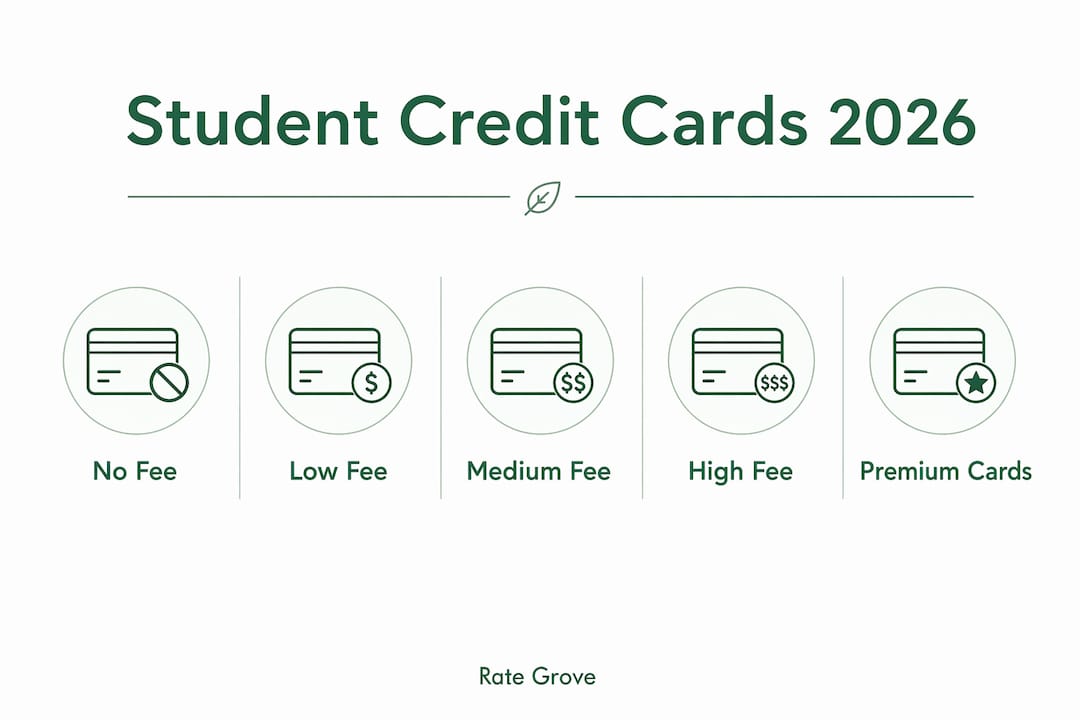
| Fee Tier | Typical Annual Cost | Who It Suits |
|---|---|---|
| No annual fee | $0 | Students, light users, credit builders |
| Basic rewards | $35 | Moderate spenders who use card perks regularly |
| Mid-tier | $100 | Frequent spenders who maximize travel or dining rewards |
| Premium | $250 and above | Heavy travelers who use lounge access, travel credits, and elite perks |
For students in 2026, the first row is the only one that typically makes sense. The cards in this comparison are almost all in that row, which is exactly why they rank as the best options for this audience.
Rate Grove makes comparing student credit cards faster
Sorting through annual fees, APR ranges, and rewards structures across a dozen cards takes time you probably don’t have. Rate Grove is a finance comparison tool built specifically for this kind of decision: side-by-side fee and rate comparisons pulled from verified issuer and regulator sources, updated monthly, and presented without the clutter.
Rate Grove isn’t one of the card issuers compared above. It’s a different kind of resource: a place to compare credit card fees and rates quickly, without wading through outdated information or promotional copy dressed up as editorial content. If you’ve read this far and still want to check current rates before applying, Rate Grove’s student card comparison gives you a clean, verified snapshot in one place.
Key Takeaways
Nearly every top student credit card in 2026 charges $0 in annual fees, making fee-free options the clear default for students building credit on a budget.
| Point | Details |
|---|---|
| $0 is the standard | The best student credit cards all charge no annual fee, so there’s no reason to pay one. |
| First-year fee waivers matter | Some cards waive fees for year one, giving you a trial period to evaluate rewards before committing. |
| Annual fees range from $35 to $100 for standard cards | Premium cards run much higher, but student cards sit firmly at $0 across the top options. |
| Closing a no-fee card can hurt your score | Keeping old accounts open preserves credit history length, which affects your credit score. |
| Rate Grove simplifies the comparison | Rate Grove’s monthly-updated guides let you verify current fees and rates from issuer sources in one place. |