

Finding a trusted resource to compare banking and credit products side by side with current rates and transparent reviews often takes too much time. Many sites force you to visit multiple providers or lack regularly verified rates, leaving you to reconcile numbers and features alone. This article details which comparison platforms publish the clearest, most up-to-date rate and fee information so you can shortlist trusted sources for your next financial decision.
Table of Contents
Rate Grove
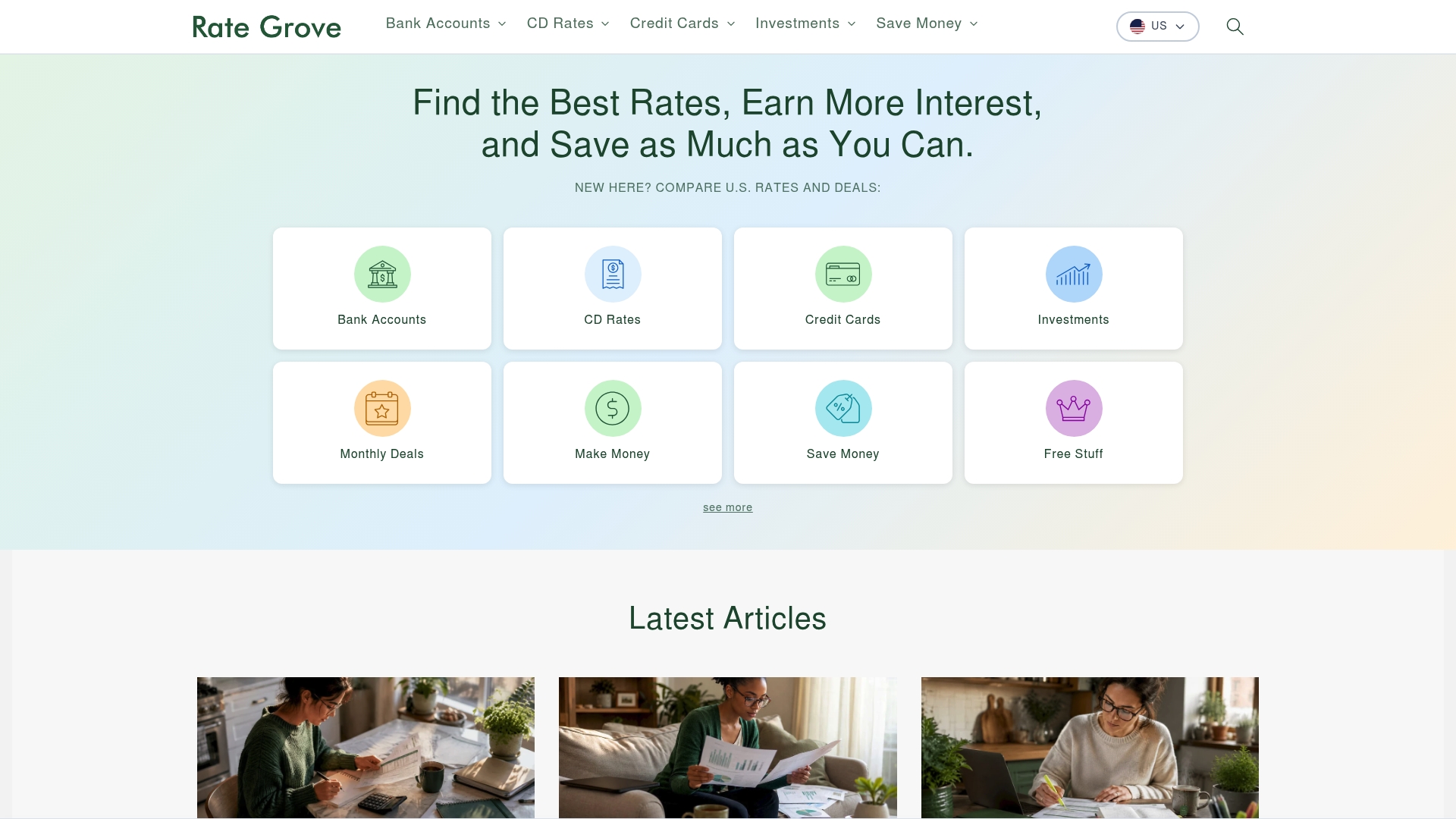
At a Glance
Monthly updated guides verify rates and fees against issuer and regulator sources. The site publishes side-by-side comparisons of bank accounts, CDs, credit cards, and investments. Editorial authors and edits are clearly labeled to support transparency. This focus helps you skip juggling multiple bank pages and spreadsheets during rate research.
Core Features
Rate Grove maintains monthly updated guides that cover savings accounts, CDs, credit cards, investments, and deals, and it publishes product reviews and expert analysis. Comparison tables show side-by-side comparisons of rates, fees, and tradeoffs, while the editorial process highlights verified facts and author attribution. The site emphasizes clear explanations and educational guides on savings and credit management to help readers act on the comparisons.
Key Differentiator
Rate Grove’s one defining capability is its verified, regularly refreshed rate data pulled back to primary issuer and regulator sources. That verification reduces conflicting numbers you would otherwise reconcile across vendor pages. The transparency of labeled authors and edits makes it easier to judge when an entry was updated and why. For people who research rates quickly, that single workflow cut can save time and reduce mistakes.
Pros
Accurate, up-to-date rate comparisons come from checking results against primary sources, which lowers the chance of outdated listings. The editorial transparency with labeled authors and edits helps you trust which items were checked and when. Comprehensive guides and straightforward comparison tables remove the need for multiple tabs or a spreadsheet when weighing fees and APYs. The layout prioritizes clarity, so you can compare tradeoffs and select a product that matches your savings or credit goals.
Cons
- Dependent on publicly available and issuer-reported data, which may not always reflect the very latest changes.
Who It’s For
People who want current, verified rate data for U.S. bank accounts, CDs, credit cards, or investments benefit most from Rate Grove. Savers aiming to maximize interest and minimize fees will find the side-by-side tables useful. Financial professionals and first-time buyers also gain value from the fact-checked guides and labeled editorial sourcing.
Unique Value Proposition
Side-by-side comparisons of fees, rates, and tradeoffs verified against issuer and regulator sources let you choose faster with fewer follow-up checks. That verification reduces the extra research steps you normally need to confirm APYs and fees. For someone switching accounts or moving cash into a CD, the site shortens decision time and lowers the risk of picking a rate that changed after initial discovery.
Real World Use Case
A saver hunting for the best high-yield savings account finds Rate Grove’s latest guide, scans a comparison table, and notes the verified APY and listed fees. The labeled edit date shows the entry was updated this month. The reader then visits the chosen bank confident the listed figures match primary sources and avoids checking multiple bank pages.
Website: https://rategrove.com
Bankrate
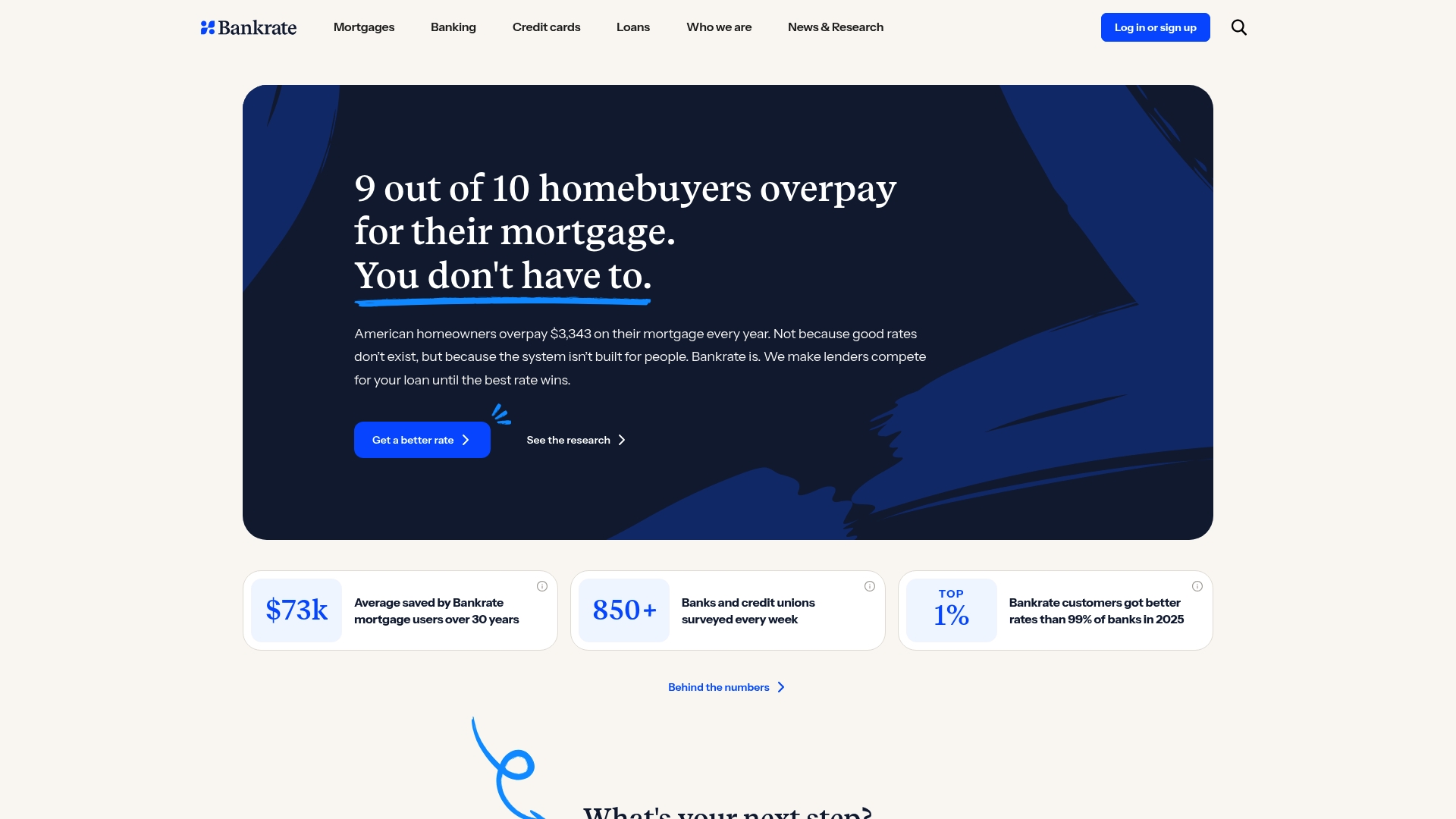
At a Glance
Bankrate runs a real time lender bidding system that pushes mortgage, refinance, and home equity lenders to compete for consumer business. The site pairs side by side rate comparisons with calculators and educational tools. Many people use it to find lower rates by forcing lender competition rather than relying on static posted offers.
Core Features
Bankrate combines broad product coverage with comparison tools and calculators. It shows mortgages, banking products, credit cards, and loans alongside personalized tools such as CardMatch and spender type assessments. The editorial team cites independent data sources, including a partnership with the Federal Reserve, to populate rate displays and market analysis.
Key Differentiator
The standout mechanism is the real time lender bidding system, which creates active competition among lenders for a single consumer request. That setup can produce sharper quotes than browsing static rate tables. The model keeps the site focused on market-driven price signals rather than on showing only landscape snapshots.
Pros
The bidding model helps consumers find competitive offers by creating lender competition on the request level. Broad market coverage means you can compare mortgages, credit cards, savings accounts, and loans in one place. Bankrate pairs comparisons with calculators and educational articles, which helps people understand tradeoffs and total costs. The site emphasizes independence and data sourcing, which supports objective comparisons rather than product placement.
Cons
- Complexity of information may overwhelm some people. The volume of tools and data can feel heavy for a single session.
- Pricing details come from individual lenders rather than being fixed on the site. That means final terms depend on lender underwriting.
- The site does not provide personalized financial planning or advisory services. Users seeking tailored guidance will need a separate advisor.
- Access to full features may require account registration, which adds friction for casual browsers.
When It May Not Fit
If you want one-on-one financial planning, this service is not a substitute for a licensed advisor. The platform supplies rate information and comparisons rather than issuing loans directly. People who expect guaranteed final terms on the spot may find lender underwriting and account requirements add surprise steps.
Who It’s For
Consumers who want transparent, market-based comparisons of lending and banking products will benefit most. Homebuyers and refinancers who plan to shop multiple lenders gain from the active bidding model. People comfortable reading rates, fees, and calculator output will extract the most value.
Real World Use Case
A first time homebuyer requests quotes and compares offers returned through the bidding system. The buyer reviews mortgage quotes, runs the mortgage calculator, and narrows options from the lender responses. Using Bankrate, they compare offers from over 100 lenders and identify a lower rate that reduces monthly payment risk.
Website: https://bankrate.com
Finder
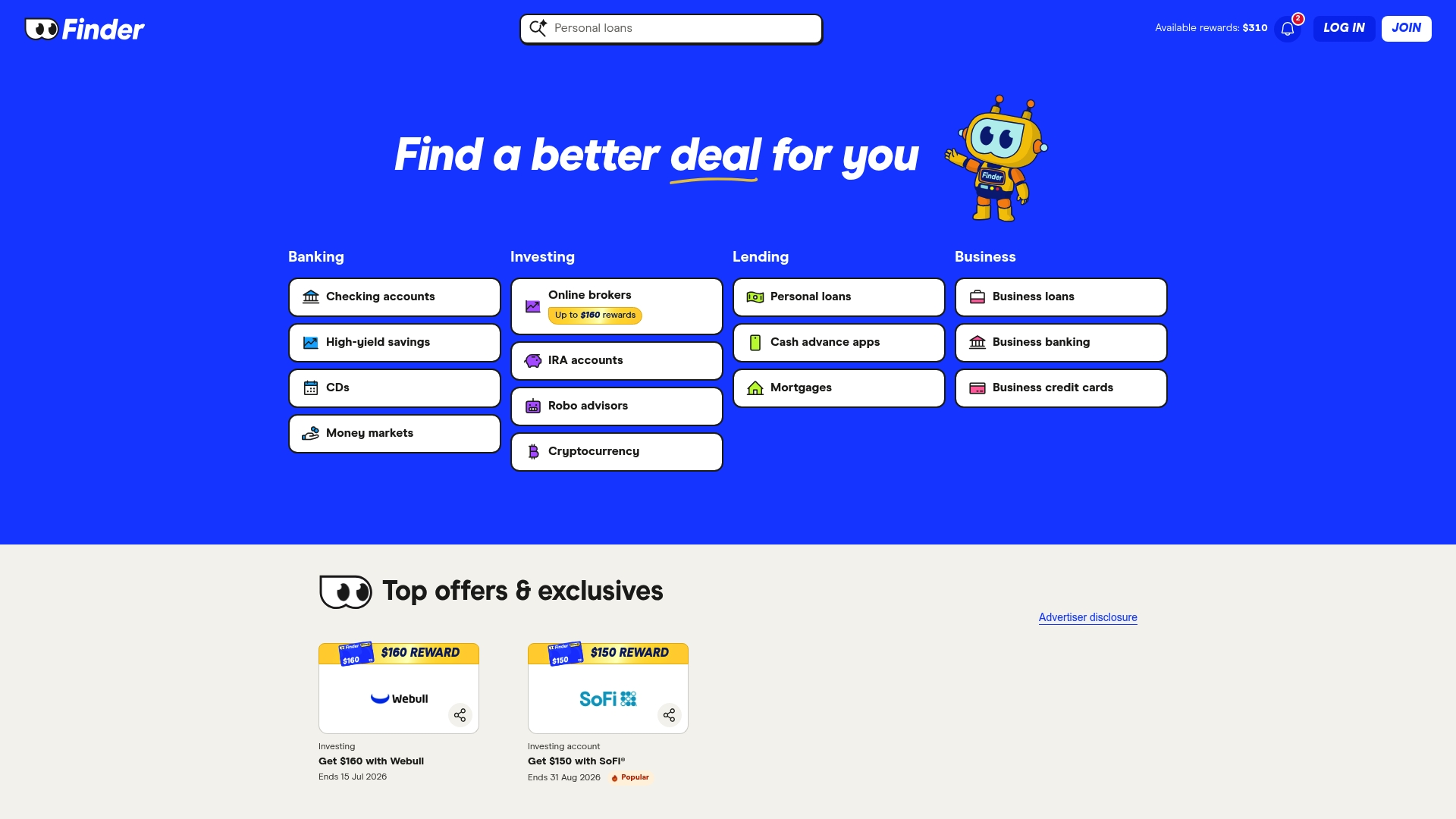
At a Glance
Finder publishes a transparent scoring metric called the Finder Score and runs a members rewards program for deal exclusives. The site covers banking, loans, investing, and insurance with editorial reviews and comparison tools. Its community forums and educational content help shoppers compare options before contacting providers.
Core Features
Finder organizes side-by-side product searches and editorial reviews that explain tradeoffs in plain language. The site offers tools to locate and contact financial service providers and a discussion area for consumer questions. The Finder Score appears alongside reviews to clarify how products were evaluated.
Key Differentiator
Finder’s marketing materials describe award-winning editorial content and a broad independent comparison database that aims at mainstream consumer choice. That award claim highlights the editorial focus more than narrow issuer verification. Compared with Rate Grove, Finder targets broader category coverage and member deal tracking rather than issuer and regulator verified side-by-side bank rate audits.
Pros
Finder maintains a wide independent comparison database that helps you find many products in one place. Its editorial content and how it explains decisions make complex product differences easier to read. The platform also highlights member deals and a rewards program that can reduce effective cost when signing up for certain products.
Cons
- Recommendations are based on independent analysis and may not match every individual situation.
- Finder does not provide direct financial products or personalized financial advice.
- Users need to verify product details directly with providers before acting.
- Pricing and final offer data are informational; live quotes require provider contact.
When It May Not Fit
If you need direct account opening or a managed financial account, Finder is not the right place. If you require regulator or issuer-verified rate sheets for compliance, this editorial approach is narrower than that need. If you want tailored financial advice based on a full personal profile, Finder will not supply that service.
Who It’s For
Finder fits consumers who want independent explanations and quick comparisons across many categories. It suits people hunting promotional deals and who value editorial context around offers. It also helps readers who want community discussion before they contact providers.
Real World Use Case
A homeowner shopping for a mortgage uses Finder to compare lender features and to read editorial notes on fee structures. They use the site tools to shortlist lenders, then contact those providers for live rate quotes. The editorial summaries and community threads speed the shortlist process.
Website: https://finder.com
WalletHub
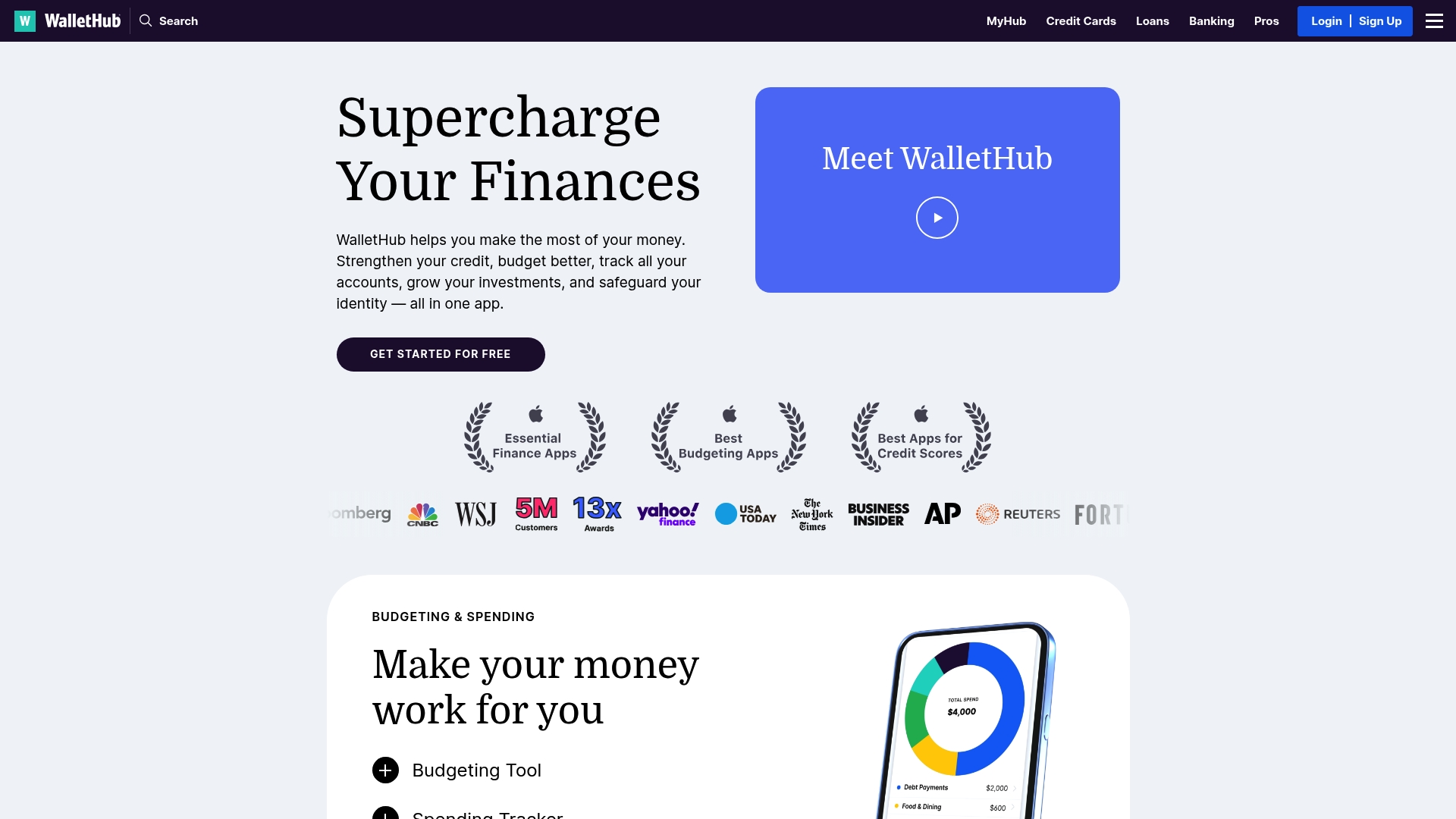
At a Glance
Free daily-updated credit scores and reports are available at no charge. The site pairs those scores with editorial guides, product comparisons, and identity protection tools. You get budgeting and spending trackers plus WalletScore and WalletLiteracy assessments for a broader view of financial health.
Core Features
WalletHub centralizes credit monitoring, product comparisons, and budgeting tools in one place. It delivers credit scores and reports with daily updates and offers credit monitoring and identity protection services. WalletScore and WalletLiteracy provide simple, labeled assessments to help you prioritize fixes and track progress.
Key Differentiator
WalletHub’s marketing states it offers the most comprehensive free credit scores, reports, and monitoring along with a holistic scoring system. That claim translates to daily-updated credit visibility plus editorial guidance and automated suggestions for products. The platform emphasizes measurable steps you can take and ties those steps to its WalletScore so you can watch improvement.
Pros
That free daily score and report access gives you constant visibility into credit movement. The platform combines unbiased product reviews and proprietary metrics with tools for budgeting, debt payoff roadmaps, and dark web monitoring, which helps you act on problems from one dashboard. The interface is easy to use and the site highlights audited, independently reviewed credibility for its editorial content.
Cons
- Some users report accuracy concerns for certain data points, which can cause confusion about precise credit position.
- Third-party reviews flag limited customer support options, making live help harder to reach when you need it.
- Financial product listings may reflect advertiser relationships, and WalletHub discloses that potential influence.
When It May Not Fit
If you need licensed financial advice, WalletHub is not a substitute for a certified advisor. The platform depends on external data feeds and self-reported information, so it may not match sources used by lenders for underwriting. If you require white glove support or one-on-one account management, WalletHub’s support model may feel too light.
Who It’s For
This service fits individuals who want free, all-in-one financial health monitoring and actionable product comparisons. It works well for people focused on credit score improvement, budgeting, or identity protection without paying for a subscription. If you prefer self service with editorial guidance and tool-driven recommendations, this matches your needs.
Real World Use Case
A person checks their daily credit score, follows WalletHub’s suggested steps to reduce utilization, and watches WalletScore improve over weeks. They compare credit card offers side by side and use budgeting tools to free cash for debt payoff. Identity monitoring alerts them to a potential breach so they lock accounts quickly.
Website: https://wallethub.com
Comparison of alternatives
- Excluded products (discontinued / inaccessible / under construction): None
- Usable competitors remaining: [Bankrate, Finder, WalletHub]
Intro pre-write:
- Does rategrove.com clearly outpace every usable competitor on a single dimension? YES
- If YES: dimension where rategrove.com wins – Verified rate data checked against issuer and regulator sources.
- First sentence draft: Differentiating platforms for financial comparisons reveals Rate Grove’s advantage in transparent and verified rate data validated against primary sources.
Competitor win pre-write:
- Which competitor wins which dimension: Bankrate wins dynamic lender bidding because it uniquely enables competitive pricing through its request-based system.
- Does this dimension matter to the primary reader? YES
Best Fit uniqueness check:
- List each bullet scenario in one clause: People prioritizing verified and transparent rate information for savings and credit / People seeking dynamic lender competition for interest rates on loans / Individuals looking for broad comparisons including rewards and exclusive deals.
- Can any two be swapped without changing meaning? NO
Our Pick pre-write:
- The ONE capability unique to rategrove.com in this set: Monthly updated rate guides verified through issuer checks.
- Evidence from the reviews: “Rate Grove maintains monthly updated guides that cover savings accounts, CDs, credit cards, investments, and publishes product reviews and expert analysis.”
- Closing sentence draft: Rate Grove’s verified guides simplify savings selection and reduce the time spent reconciling conflicting claims among banks.
- Substitution test: “Bankrate’s verified guides simplify savings selection” – Does the substituted version still work as a recommendation? NO
- If YES: rewritten closing sentence: Not applicable.
Comparison of alternatives
Analytical subsection 1: Transparency in Data Verification
Rate Grove distinguishes itself by validating its rate guides against issuer and regulatory sources, ensuring accuracy and trustworthiness for consumers relying on its comparisons. Finder offers broad editorial reviews but doesn’t implement similar primary-source validation, which may lead to a mismatch in rates documented versus final offers. Bankrate also sources data independently but focuses more on dynamic interactions, such as its lender bidding system, than guide transparency. WalletHub covers credit metrics but similarly lacks direct rate validation.
Analytical subsection 2: Dynamic Lending Options
Bankrate excels in enabling dynamic lender competition, offering live bids tailored to consumer requests and fostering competitive interest rate pricing. This feature proves valuable for borrowers looking to analyze loan product options interactively. While Rate Grove provides static comparisons optimized for accuracy, it doesn’t offer the same level of real-time pricing variation. Finder and WalletHub similarly lack this interactive lender negotiation feature.
Best fit
- People prioritizing verified, transparent rate information across banking and credit will benefit from Rate Grove’s issuer-checked comparisons.
- Borrowers seeking personalized lender competition for mortgages or loans will find Bankrate’s bidding system a better solution.
- Consumers wanting broad product comparisons, including rewards programs or exclusive promotions, would lean towards Finder for its wide coverage and member benefits.
Our pick
Rate Grove is the recommended choice for those needing fast and accurate savings account or credit product selection based on verified data sources. For proactive bank and fee comparisons, it reduces conflicts and extra verifications. However, if interactive lender negotiation is a priority, platforms such as Bankrate may provide a better fit.
Rate Grove is distinguished by its commitment to verified and regularly updated rate data, saving users time and ensuring accuracy.
| Product | Key Differentiator | Best For | Pricing | Notable Limitation |
|---|---|---|---|---|
| Rate Grove | Verified rate data from issuer and regulator sources | Those needing up-to-date savings and credit comparisons | Price not published | Dependent on publicly available data |
| Bankrate | Real-time lender bidding system for competitive offers | Consumers seeking tailored rate comparisons | Price not published | Complexity of data may overwhelm some users |
| Finder | Finder Score for product evaluation and member rewards | Broad comparison across various categories | Price not published | Lacks account opening and direct tailored advice |
| WalletHub | Free daily credit scores with detailed monitoring | Users focused on financial health and identity protection | Price not published | Limited customer support options |
Finding Reliable tribute.ocrahope.org Alternatives Without the Confusion
Many people searching for tribute.ocrahope.org alternatives feel confused by outdated or conflicting financial rate information. You need clear, verified data that lets you compare bank accounts, CDs, and credit cards side by side without losing time or second-guessing the details. Rate Grove solves this challenge by offering monthly-updated guides that pull verified rates and fees directly from issuer and regulator sources.
This means you can skip juggling multiple bank websites or spreadsheets when trying to find the best deal. Whether you are a saver aiming to maximize interest or a financial professional needing accurate data fast, Rate Grove’s transparent comparison tables and expert editorial reviews give you confidence in your choices.
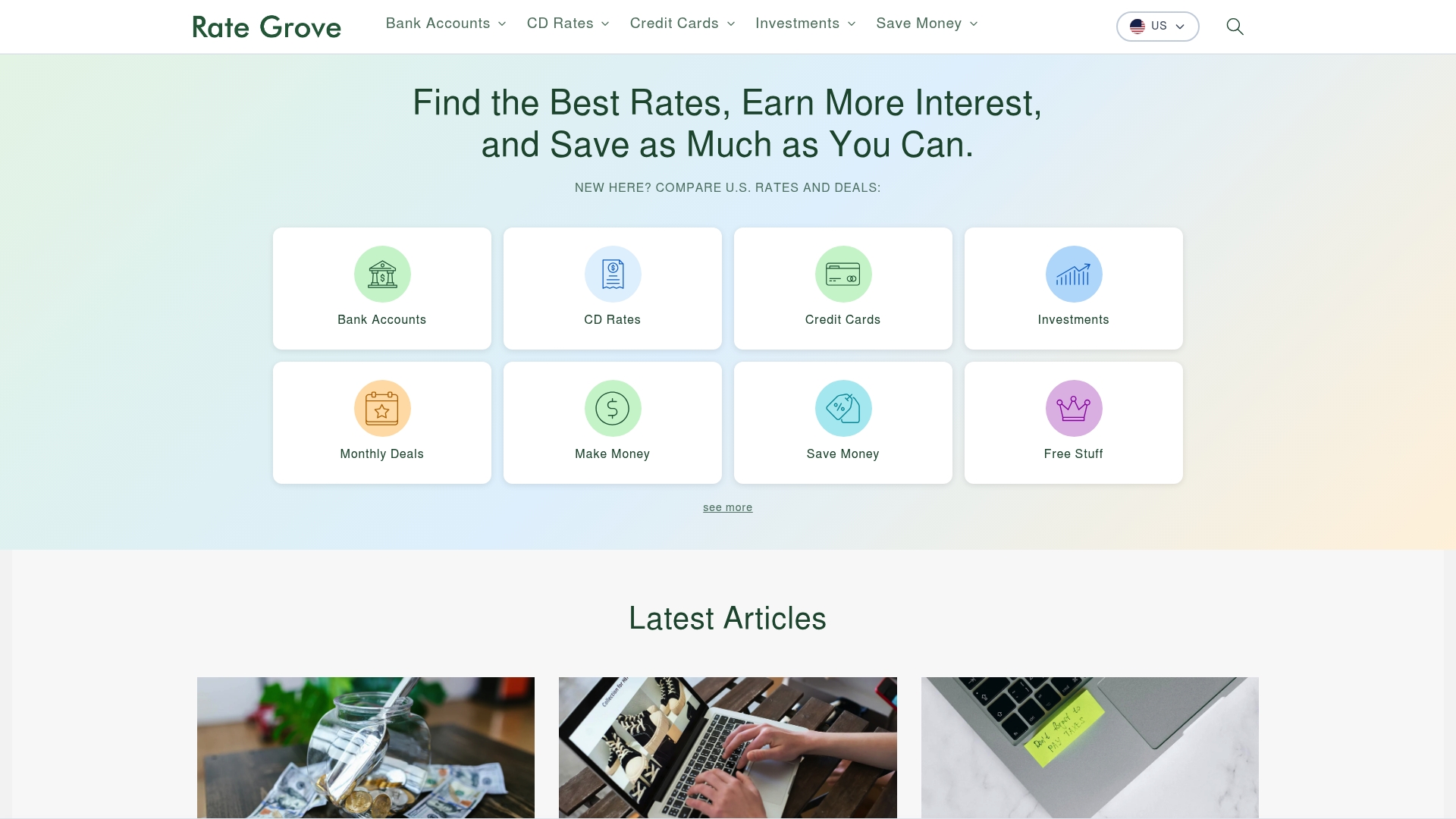
Check verified rates and fees at Rate Grove now to make faster, informed financial decisions. Use Rate Grove’s trusted tools to quickly find competitive offers and avoid outdated info slowing you down.
FAQ
What features make Rate Grove a suitable choice for banking and credit comparisons?
Rate Grove offers accurate, up-to-date rate comparisons sourced directly from primary issuers and regulators. This verification reduces outdated listings and supports effective decision-making. Users can confidently compare current banking options in one streamlined flow.
How does Rate Grove compare to Bankrate in terms of product offerings?
Bankrate excels with its real-time lender bidding system, which creates active competition among lenders for consumer inquiries. Rate Grove, on the other hand, provides verified rate data to streamline comparisons across bank accounts, CDs, and credit products, making it ideal for those needing a quick and clear overview of rates and fees.
What is the main advantage of using Rate Grove over other platforms for banking comparisons?
Rate Grove features editorial transparency, showcasing labeled authors and edits that enhance trust in the data provided. This level of detail ensures users are well-informed about when rates were last verified, allowing for timely and appropriate financial decisions.
How can Rate Grove help users maximize their savings or find lower fees?
Rate Grove’s side-by-side comparison tables display current interest rates and fees clearly, making it easier for users to make informed choices. This transparency allows individuals to select products that best align with their financial goals and aspirations.
What specific benefits does Rate Grove offer for first-time buyers or financial professionals?
Rate Grove delivers fact-checked guides and clear comparisons that ease the research process for both first-time buyers and seasoned financial professionals. The structured information helps users navigate banking choices with confidence and helps optimize their financial strategies.