

Use a high-yield savings account (HYSA) when you need your cash available on short notice, and use a CD when you have a specific date in mind and want to lock in today’s rate. With HYSA and CD rates sitting close together through 2026, your time horizon matters more than the small gap in APY. The checklist and comparison below walk you through exactly how to decide.
TL;DR:
- If you have a known future expense within a year, a CD offers a fixed rate and certainty, but early withdrawal penalties can erode gains if you need cash sooner.
- A HYSA provides flexible access, with variable rates that tend to follow Federal Reserve cuts quickly, making it ideal for emergency funds and short-term needs.
- When rates are close in 2026, choosing between a HYSA and CD depends more on your liquidity needs and the size of your balance rather than small APY differences.
- For larger balances, even slight rate advantages in a CD become more worthwhile, but smaller amounts may not justify the hassle of managing maturities and rollovers.
- Always verify account details and penalties before opening, and set reminders to handle CD maturing dates to maximize returns and avoid automatic renewals into lower rates.
Table of Contents
- HYSA vs CD: The Short Answer
- What Is a CD and How Does It Work?
- What Is a High-Yield Savings Account and How Does It Work?
- HYSA vs CD: Rates, Access, and Real Dollar Math
- How to Decide: Horizon, Certainty, and Balance Size
- How to Shop for and Open a HYSA or CD
- How Rate Grove Verifies HYSA and CD Rates
- A Practical Take on Splitting Your Savings
- Compare HYSA and CD Rates Side by Side With Rate Grove
- Sources
- FAQ
HYSA vs CD: The Short Answer
If you’re skimming for the quick version, here it is. Your emergency fund belongs in a HYSA. Money you won’t touch for a set period, like a house down payment due in 14 months, usually earns better peace of mind in a CD.
- HYSA: best for emergency funds, near-term goals, or anytime access to your money.
- CD: best for date-certain goals or when you want to lock in a rate before it potentially drops.
- When rates are close: favor the HYSA’s flexibility unless you’re confident you won’t need the cash early.
- Medium-term goals: consider splitting funds or building a short CD ladder instead of picking one product for the whole balance.
Pro Tip: *Don’t let a fractional rate difference dictate the decision for you.
Rate direction adds another layer here. When the Federal Reserve signals cuts, HYSA rates tend to fall almost immediately because they’re variable, while a CD you open today keeps paying its locked-in rate until it matures. That single fact explains most of the strategy in this article.
What Is a CD and How Does It Work?
A certificate of deposit is a time deposit: you agree to leave your money with a bank or credit union for a fixed term, and in exchange, you get a locked-in interest rate for that term. The Consumer Financial Protection Bureau defines a CD this way and notes that pulling your money out early almost always triggers a penalty.
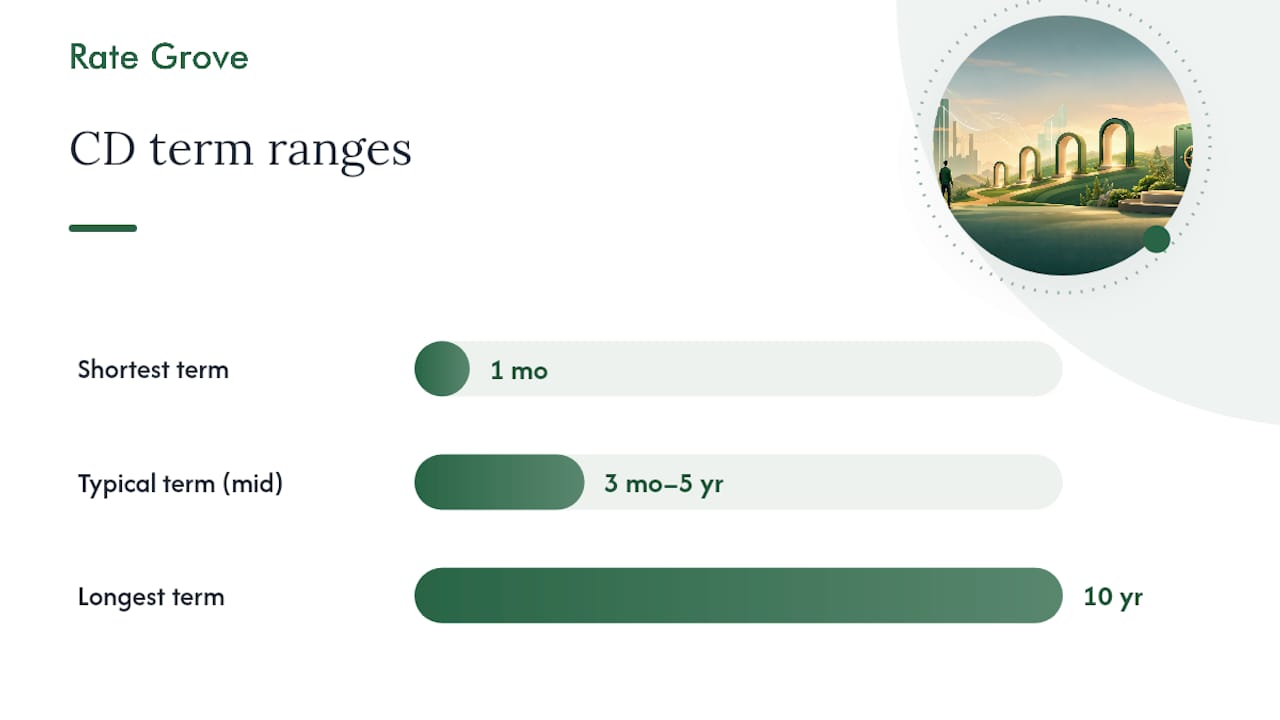
Terms typically run from three months to five years, though some issuers offer terms as short as one month or as long as ten years. The rate gets set the day you open the account and stays fixed for the entire term, regardless of what happens to the broader rate environment afterward.
Early withdrawal penalties usually scale with the length of the term. A one-year CD might charge roughly 90 days of interest as a penalty, while a multi-year CD could charge 180 days or more. If you break the CD before you’ve earned enough interest to cover that penalty, some banks will take the difference out of your principal, meaning you’d get back less than you deposited. Understanding the exact penalty structure before you open the account saves you from an unpleasant surprise later.
Not every CD works the same way:
- Traditional CD: fixed rate, fixed term, penalty for early withdrawal.
- No-penalty CD: slightly lower rate but lets you withdraw early without a fee, usually after the first six or seven days.
- Bump-up CD: lets you request a one-time rate increase if the bank’s rates rise during your term.
- Brokered CD: sold through an investment platform rather than directly by the bank, often with different liquidity features.
- IRA CD: a CD held inside a retirement account, combining the fixed-rate structure with tax-advantaged treatment.
Your deposit is protected the same way a regular savings account is. Banks carry FDIC insurance up to $250,000 per depositor, per ownership category, per institution, and credit unions carry the equivalent through the NCUA. Always confirm coverage before parking a large balance in one place.
What Is a High-Yield Savings Account and How Does It Work?
A high-yield savings account is a variable-rate deposit account with no set term and no maturity date. Unlike a CD, the bank can raise or lower your rate at any time, usually in response to Federal Reserve moves and shifts in short-term Treasury yields.
There’s no lock-in period, which means you can deposit and withdraw as needed, subject to whatever transfer limits your bank sets. Most online banks offer a rate that’s meaningfully higher than a traditional brick-and-mortar savings account, which is where the “high-yield” label comes from.
A few features are worth checking before you commit to one:
- Transfer limits: many banks still cap certain transfer types per statement cycle, even though federal Regulation D limits were relaxed.
- Minimum balance requirements: some accounts need a minimum deposit or balance to earn the advertised rate.
- Promotional rates: an eye-catching APY might apply only for the first three or six months, then drop to a lower standard rate.
- ATM and debit access: most HYSAs don’t come with a debit card, so plan for a transfer delay of one to three business days when you need cash.
Rates shift for a reason. When the Fed cuts its benchmark rate, HYSA yields tend to follow within weeks because banks aren’t locked into paying you a fixed amount. Watching three-month and six-month Treasury yields gives you an early signal on where your HYSA rate is headed next.
Deposit insurance works the same way here as it does with a CD. Your balance is covered up to $250,000 per depositor, per ownership category, per bank through the FDIC or NCUA, and reading the fine print on any types of HYSA offer before you apply helps you spot which conditions actually govern your rate.
HYSA vs CD: Rates, Access, and Real Dollar Math
The core trade-off comes down to four things: whether the rate is fixed or variable, how easily you can get your money, what it costs to break the terms early, and what you’re actually trying to save for. Here’s how the two stack up.
| Feature | High-Yield Savings Account | Certificate of Deposit |
|---|---|---|
| Rate type | Variable, can change anytime | Fixed for the full term |
| Access/liquidity | Withdraw anytime, subject to transfer limits | Locked until maturity |
| Early withdrawal penalty | None | Typically 90 to 180 days of interest, sometimes from principal |
| Best for | Emergency funds, uncertain timing | Date-certain goals, rate locking |
| Typical APY range (2026 context) | Roughly 3.00% to 4.50% at top online banks | Roughly 3.00% to 4.50% for short terms |
That overlap in APY range is the headline story of the current market. Through much of 2026, top HYSAs and short-term CDs have been paying similarly, which flips the usual “CDs always pay more” assumption on its head. When the rates are this close, the decision stops being about yield and starts being about what you actually plan to do with the money.
Run the numbers on $10,000 and the gap becomes concrete. That’s a $25 difference on $10,000, which is real money but rarely enough to justify locking up funds you might need for a car repair or a job loss.
Where the math shifts is balance size. On $100,000, that same 25 basis point spread turns into a $250 annual difference, which starts to matter more once you’re confident the money is untouchable for the full term. Smaller balances rarely justify the hassle of tracking a CD’s maturity date and reinvestment options for such a marginal gain, while larger balances make the guaranteed CD return more worth the trade-off in flexibility.
One more detail that trips people up: neither account gives you a tax break. The IRS treats interest from both a HYSA and a CD as ordinary income in the year you earn it, even if you don’t withdraw it. A five-year CD that pays out at maturity still generates a 1099-INT every single year it accrues interest, not just the year it matures.
How to Decide: Horizon, Certainty, and Balance Size
Three questions settle most HYSA vs CD debates before you even look at a single rate table.
- When will you need the money? If the answer is “I’m not sure” or “possibly soon,” that uncertainty alone should push you toward a HYSA. If you know the exact month, like a wedding deposit due in September or a tuition payment due next spring, a CD timed to mature right before that date locks in your return with zero guesswork.
- How confident are you that you won’t touch it early? Life happens. If there’s a real chance you’d need to break the CD, the early withdrawal penalty can wipe out the small rate advantage you were chasing in the first place.
- How large is the balance? On smaller amounts, a fractional APY difference isn’t worth the loss of flexibility. On larger balances, even a small rate edge compounds into a dollar figure worth protecting with a locked rate.
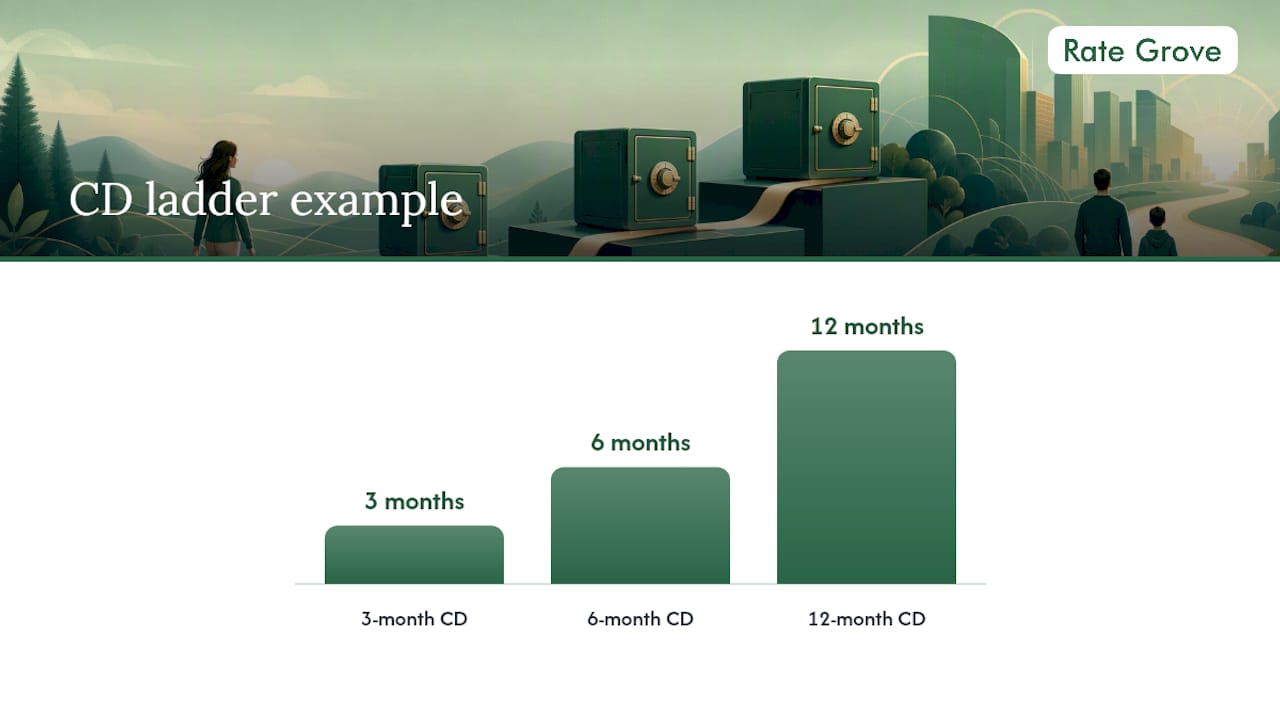
A few rules of thumb follow naturally from those questions. Keep your true emergency fund, generally three to six months of expenses, in a HYSA where it’s always reachable. Route money for a known future expense into a CD timed to mature right when you need it. For goals sitting somewhere in the middle, like a down payment you’re saving toward but don’t have a firm date for yet, a CD ladder often works better than committing everything to one term length. Laddering across multiple maturities, say three months, six months, and twelve months, means part of your money becomes available every few months while the rest keeps earning a locked rate.
If you’re weighing whether the CD side of that split is even worth the effort, this is where balance size does the deciding. A rate gap that saves you $25 a year on $10,000 isn’t worth tracking a maturity date and rollover paperwork. The same gap on $50,000 or more starts to justify the extra attention.
Pro Tip: Set a calendar reminder ten days before any CD matures. Most banks auto-renew into a new CD at whatever rate is current on the renewal date, and that grace window, often just seven to ten days, is your only chance to withdraw penalty-free or shop for a better rate elsewhere.
Beyond HYSAs and CDs, a few adjacent tools are worth a passing mention if you’re saving for something further out. Series I savings bonds adjust with inflation, short-term Treasury bills often track closely with HYSA rates, and multi-year guaranteed annuities (MYGAs) offer CD-like rate locks over longer horizons. None of them replace the core HYSA vs CD decision for most short- and medium-term savers, but they’re worth a look once your time horizon stretches past a few years.
How to Shop for and Open a HYSA or CD
Comparing offers takes ten minutes if you know where to look and what to check first. Start with a side-by-side comparison tool that pulls current APYs across multiple banks, rather than checking issuer sites one at a time, since rates change monthly and sometimes weekly. Cross-reference anything that looks unusually high against the FDIC’s national rates page, which tracks average deposit rates and helps you spot whether an offer is genuinely competitive or a short-lived promotional teaser.
Before you apply anywhere, run through this checklist:
- APY versus promo conditions: confirm whether the advertised rate applies to your whole balance or only kicks in above a minimum deposit.
- Minimum opening deposit: some HYSAs and CDs require $500 to $2,500 minimums, while others have none.
- Compounding frequency: daily compounding beats monthly compounding slightly, even at the same stated APY.
- Early withdrawal penalty (CDs only): know the exact penalty in dollars, not just months of interest, before you commit funds.
- Renewal rules (CDs only): check the grace period length and whether the account auto-renews into the same term or a different one.
Opening either account online typically takes fifteen minutes. You’ll need a government-issued ID, your Social Security number, and a way to fund the account, usually a linked bank account or a transfer from an existing account. Once your CD is open, set a maturity reminder immediately, and once your HYSA is open, double-check that any promotional rate has a clear expiration date written into the terms rather than buried in a footnote.
How Rate Grove Verifies HYSA and CD Rates
Rates on this page and across Rate Grove’s guides are checked monthly against issuer pages and cross-referenced with the FDIC’s national rates data, since advertised APYs change often enough that a rate published even six weeks ago can be stale.
A rate that looks great in a headline can still hide a catch, whether that’s a promotional window that expires after 90 days, a minimum balance most savers won’t hit, or a renewal term that resets to something less competitive. Verifying against the issuer’s own page and the FDIC’s data is the only way to know the number you’re seeing is the number you’ll actually earn.
Every guide gets fact-checked on that same monthly cycle, with promo conditions and minimum balance requirements flagged clearly rather than buried in fine print. If you want to confirm a specific rate mentioned anywhere on Rate Grove, the issuer’s own rate page and the FDIC’s national average are the two sources worth checking first.
A Practical Take on Splitting Your Savings
Most savers overthink this decision. The math says: keep your emergency fund liquid, lock a rate for money with a known due date, and stop agonizing over a quarter-point APY difference that amounts to a few dollars a year on a typical balance.
Where people get into trouble is treating a CD like a savings account with a bonus rate attached. It isn’t. Breaking a CD early to cover a surprise expense can erase months of interest, sometimes more than you would have earned keeping the money in a plain HYSA the whole time. If there’s any real chance you’ll need the cash before the term ends, that possibility alone should override the rate difference.
A simple split works for most situations: emergency fund and near-term goals in a HYSA, date-certain goals in a CD or short ladder, and a calendar reminder set before every CD matures so a good rate doesn’t quietly roll into a mediocre one.
— Mat C.
Compare HYSA and CD Rates Side by Side With Rate Grove
Shopping for the right account shouldn’t mean opening a dozen browser tabs and squinting at fine print on every bank’s website. Rate Grove pulls current APYs, penalties, and minimum balance requirements for HYSAs and CDs into one side-by-side view, verified monthly against issuer and FDIC data, so you can filter by term length and access needs instead of guessing which offer is actually competitive right now.
That side-by-side format is exactly what matters once you’ve settled on liquidity versus a locked rate as your priority. You can filter for no-penalty options if flexibility is the goal, or sort by APY for the term length you’ve already decided fits your date-certain savings plan. If you’re weighing a large balance across multiple accounts, Rate Grove’s FDIC coverage guide walks through how to structure deposits so more of your money stays insured. Head to Rate Grove to compare live HYSA and CD offers and find the account that matches the goal you’re actually saving for.
Sources
A few primary sources are worth bookmarking if you want to double-check anything in this guide against the original data.
- Federal Deposit Insurance Corporation (FDIC)
- Consumer Financial Protection Bureau — What is a certificate of deposit (CD)?
- HYSA vs a CD, and Which One Wins as the Fed Cuts — 24/7 Wall St.
This article is general information, not a substitute for advice from a qualified financial advisor. Consult a qualified financial professional about your own circumstances before acting on anything here.
FAQ
How much will a $10,000 CD make in one year?
A similar HYSA with a variable rate near 4% could earn a comparable amount, though the actual interest may vary as rates change.
Which bank gives 7% interest on savings accounts?
No mainstream HYSA is currently paying anywhere near 7% APY; top nationally available accounts have been clustering roughly between 3.00% and 4.50% through 2026. Advertisements promising much higher rates are usually limited to a small promotional balance cap or a short introductory window, so read the fine print before assuming that headline rate applies to your full deposit.
Who has a 9.5% APY CD?
No widely available CD is currently offering 9.5% APY; current top rates for short-term CDs sit in a similar range to HYSAs, roughly 3.00% to 4.50%. Any offer advertising a rate that far above the market typically comes with a very small deposit cap, a short promotional term, or additional conditions that limit how much interest you’d actually collect.
What is the downside of a HYSA?
The main downside is that the rate is variable, so your yield can drop with little notice if the Fed cuts its benchmark rate, unlike a CD that locks in its rate at opening. Interest earned is also taxed as ordinary income every year, and some accounts limit certain types of transfers or require a minimum balance to earn the advertised APY.
Is a HYSA safe?
Yes. A high-yield savings account at an FDIC-insured bank or NCUA-insured credit union is covered up to $250,000 per depositor, per ownership category, per institution, the same protection that applies to a traditional savings account or CD. The variable rate means your yield can change, but the safety of your principal within those insurance limits does not.