

Negotiate salary and savings together from the start, and you leave the table with more than a bigger paycheck. The single most effective move: wait for a formal written offer, then ask for a higher base plus one specific savings-related change, such as an improved 401(k) match, a signing bonus to seed your emergency fund, or an accelerated review date. That combination matters because most employer savings features are percentage-based, so a higher salary baseline directly multiplies what your employer contributes over time.
Your three-step next action:
- Wait for a written offer before naming any number
- Set your target salary using market data, then add a reasonable buffer above your target for your opening ask
- Request base pay and one specific savings or benefits change in the same conversation
Key Takeaways
Negotiating salary and savings together is the single most effective way to maximize total compensation because percentage-based employer benefits scale directly with your base pay.
| Point | Details |
|---|---|
| Wait for a written offer | Your leverage peaks after an employer commits; never negotiate verbally during interviews. |
| Combine base + one savings item | Ask for a salary increase and one specific benefit change (match, signing bonus, review date) in the same conversation. |
| Quantify total compensation | Use the Year 1 formula (base + match + bonus + HSA) to compare offers accurately before deciding. |
| Automate savings immediately | Increase your 401(k) rate and set auto-transfers before your first higher paycheck to prevent lifestyle creep. |
| Get everything in writing | Confirm all negotiated terms in the offer letter or a follow-up email before your start date. |
| Rate Grove for cash deployment | Use Rate Grove to compare high-yield savings and CD rates so negotiated funds earn from day one. |
Table of Contents
- Why negotiating salary and savings together changes long-term wealth
- When to negotiate and how to maximize your leverage
- What savings and benefits items can you actually negotiate?
- How much to ask for and scripts to use
- How to calculate the real dollar value of any offer
- What to ask for when base pay truly can’t move
- Where to put a signing bonus or salary increase so it builds wealth
- Your 7-step negotiation checklist
- The compounding case for negotiating assertively
- Rate Grove helps you put negotiated cash to work
- Sources
Why negotiating salary and savings together changes long-term wealth
A salary increase does more than raise your monthly take-home. Because employer match and auto-escalation are percentage-based, raising your base pay directly increases the dollar value of retirement contributions every year you stay at that company.

Here’s a quick example.
That $2,250 difference over five years doesn’t account for compounding. Negotiating a single $5,000 raise isn’t just a pay bump; it’s a retirement accelerant.
The compounding effect of a salary negotiation extends well beyond your paycheck. Salary-linked benefits like 401(k) matches and auto-escalation mean every dollar of base pay you negotiate today keeps paying dividends for decades.
When to negotiate and how to maximize your leverage
Timing is the most underrated part of any effective salary discussion. Your leverage peaks the moment an employer has decided they want you but before you’ve accepted. That window is the written offer stage.
Key leverage moments:
- Post-written offer: The employer has committed; you haven’t. This is your strongest position.
- After a successful project or performance review: Internal raises are easier to justify when you have documented wins.
- When you hold a competing offer: A real alternative forces a concrete response.
When not to negotiate: fixed civil-service pay scales, set graduate-entry packages with published bands, and roles where the offer letter explicitly states non-negotiable compensation. Pushing in those situations can damage the relationship without any upside.
Harvard career services guidance recommends asking for time to consider any offer before responding, which buys you space to prepare a combined ask rather than reacting on the spot.
Pro Tip: If a recruiter asks for your salary expectations before an offer exists, redirect with: “I’d love to learn more about the full scope of the role first. Could you share the budgeted range?” This keeps your options open without lying or anchoring too low.
What savings and benefits items can you actually negotiate?
Total compensation is far wider than base pay. Industry guidance consistently recommends looking at the full package rather than fixating on salary alone. Here are the highest-impact items to include in your ask:
- 401(k) match level or vesting schedule: Some employers have tiered match options or can accelerate vesting. Worth asking, especially at smaller companies.
- Employer HSA contribution: Often overlooked. An extra $500–$1,000 per year in HSA funding is tax-free money for medical costs.
- Signing bonus: Employers move on this more readily than base pay because it’s a one-time cost. Use it to pay down high-interest debt or seed an emergency fund.
- Auto-escalation rate: Ask if the plan allows a higher default escalation (e.g., 2% per year instead of 1%).
- Equity or RSUs: Relevant at startups and public companies. Negotiate both the grant size and the vesting cliff.
- PTO and review cadence: An earlier performance review (90 days instead of 12 months) with a guaranteed raise threshold is a concrete financial win.
- Remote work or relocation allowance: Reduces out-of-pocket costs, which frees cash for savings.
Tradeoff to know: a larger signing bonus delivers immediate cash but doesn’t compound the way a higher base does. If you’re choosing between the two, a base increase usually wins over a three-to-five year horizon.
How much to ask for and scripts to use
Set your numbers before you walk into the conversation. Berkeley Executive Education recommends a three-number framework: a research-backed target, an initial ask set 5–15% above that target, and a walkaway number you define in advance.
Script: Responding to the original offer Script: Combined ask (base + savings change) Script: Soft pivot when base is immovable Handling common objections:
- “That’s above our budget.” Reply: “I understand. What’s the highest you can go? I want to find a number that works for both of us.”
- “Our match is company policy.” Reply: “Completely understood. In that case, could we look at a signing bonus or an earlier review date instead?”
PON research on salary negotiation strategies shows that assertive negotiators tend to secure higher starting pay, while collaborative framing improves satisfaction on both sides. The scripts above blend both: you anchor firmly, then invite a solution together.
How to calculate the real dollar value of any offer
Before you accept or counter, run this quick math on each offer you’re comparing.
First-year total compensation formula: Base salary + employer 401(k) match + signing bonus + equity value (if liquid) + HSA contribution = Year 1 total comp
Offer B pays more in Year 1 despite a lower base, but Offer A’s higher salary compounds faster. By Year 3, assuming no raises, Offer A’s cumulative match advantage closes the gap. This is why you need both the snapshot and the five-year view before deciding.
A higher base salary tends to win over a longer horizon because percentage-based benefits keep scaling with it, while a signing bonus is a one-time event.
What to ask for when base pay truly can’t move
Some employers have hard pay bands. That doesn’t mean the conversation is over. These alternatives often cost the employer less but deliver real savings value to you:
- Signing bonus: The most common flex point. Ask for an amount that covers your first three months of increased 401(k) contributions.
- Accelerated review with a guaranteed raise threshold: “Can we schedule a 90-day review with a minimum 5% raise if I hit these targets?” This converts a fixed band into a short-term ceiling.
- Increased employer retirement contribution for a period: Some employers can make a one-time or limited-term enhanced match outside the standard plan.
- Larger FSA or HSA employer seed: Reduces your taxable income and covers real costs.
- Extra PTO: One additional week of PTO at a $70,000 salary is worth roughly $1,346 in cash equivalent. It’s not nothing.
- Remote work stipend or relocation allowance: Directly reduces your cost of living.
Pro Tip: Package multiple small wins into a single trade. Instead of asking for three separate things, say: “If the base is firm, I’d like to propose a package: a $3,000 signing bonus, a 90-day review, and one additional PTO day. That makes this offer work for me.” Employers respond better to a bundled ask than a list of demands.
Where to put a signing bonus or salary increase so it builds wealth
Getting the money is step one. Directing it correctly is step two. Here’s the priority order:
- Capture the full employer 401(k) match first. This is a guaranteed 50–100% return on your contribution. Nothing else competes with it.
- Pay off high-interest debt next. Credit card balances above 15% APR cost more than most investments return.
- Build or top up your emergency fund. Three to six months of expenses in a high-yield savings account before moving to longer-term vehicles.
- Max tax-advantaged accounts. After the match and emergency fund, direct extra dollars to a Roth IRA or traditional IRA, then back to your 401(k) above the match.
- Park short-term cash in a high-yield account or CD. For a signing bonus you’ll need within 12 months, a multi-account banking strategy keeps it accessible and earning.
The most reliable tactic: automate contributions before you see the first higher paycheck. Log into your 401(k) portal and increase your contribution rate the day you accept. Set up an auto-transfer to savings the same day. Money you never see in your checking account doesn’t get spent.
Your 7-step negotiation checklist
- Research market rates. Use Bureau of Labor Statistics data, LinkedIn Salary, and Glassdoor to build a defensible range for your role, level, and location.
- Set three numbers. Target salary (market-backed), opening ask (target + 5–15%), and walkaway number.
- Wait for a written offer. Do not negotiate verbally or during the interview process if you can avoid it.
- Craft your combined ask. Base pay request plus one specific savings or benefits item.
- Practice your script out loud. Rehearse the opening line and the pivot for when base is immovable.
- Negotiate. Lead with enthusiasm, anchor firmly, and invite a collaborative solution.
- Get everything in writing. Before your start date, confirm all negotiated items in the offer letter or a follow-up email.
Follow-up email script: Most employers will give you 24–72 hours to consider an offer. Ask for the full time if you need it.
The compounding case for negotiating assertively
There’s a version of this conversation most people never have because they assume the offer is final. It usually isn’t.
What gets overlooked is that a single negotiation compounds. The raise you secure today sets the baseline for every future raise, every percentage-based benefit, and every employer contribution for as long as you stay in that role. Skipping the conversation doesn’t just cost you money now; it costs you the compounding effect of that money over a career.
The practical habit: negotiate assertively, document every win in writing, and automate your savings before lifestyle creep has a chance to absorb the difference. Treat each negotiation as a financial decision, not a social one, and the math tends to work in your favor.

Rate Grove helps you put negotiated cash to work
Once you’ve secured a better offer, the next question is where to park the extra money so it earns rather than sits. Rate Grove compares high-yield savings accounts, CDs, and money market accounts side by side, using verified data from issuers and regulators, so you can see exactly which account pays the most with the fewest strings attached.
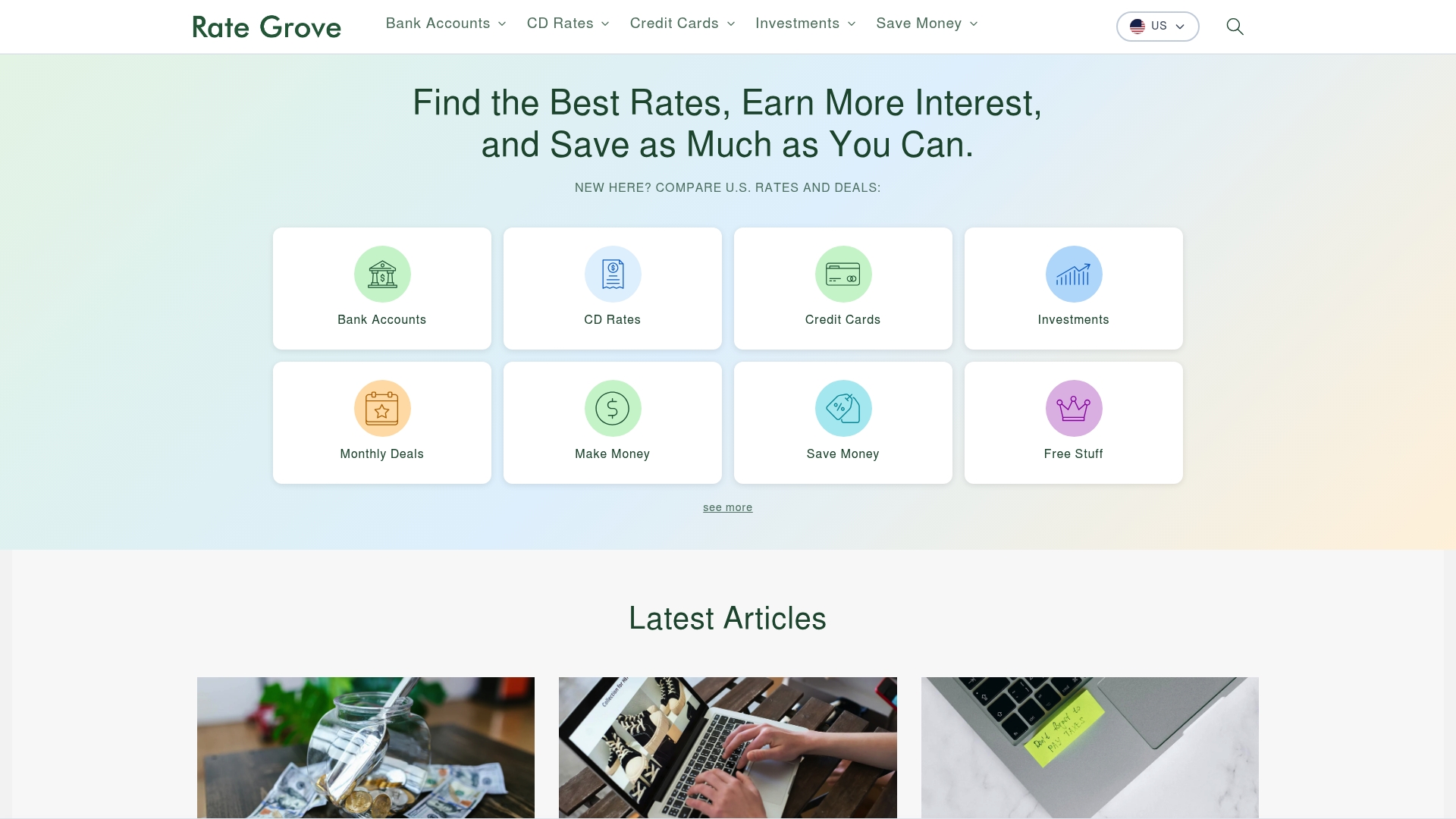
Whether you’re deciding where to hold a signing bonus for the next six months or setting up an automated transfer for your new higher paycheck, Rate Grove’s monthly-updated guides give you current rates and clear tradeoffs in one place. Check the latest high-yield savings rates at Rate Grove and set up your automated transfer before your first paycheck arrives.
Sources
- How to Negotiate Salary: 3 Winning Strategies - PON
- Salary negotiation tips that deliver results | Berkeley Exec Ed
- How Women Can Negotiate a Higher Salary for Retirement
- Evaluating and negotiating job offers | Harvard College Career Services
- What to do with a raise | WealthVieu
This article is for general informational purposes only and does not constitute financial or legal advice. Confirm current plan rules and contribution limits with your employer’s HR team or a qualified financial advisor.
This article is general information, not a substitute for advice from a qualified financial advisor. Consult a qualified financial professional about your own circumstances before acting on anything here.